


Most “best SMS platform” lists rank tools by feature count. That is the wrong starting point for an established brand. The better question is where SMS sits in your retention system, because that decides which platform makes sense: the one already running your email, a specialist built around text, or a managed service that does the work for you.
This guide is organized by starting situation instead of a ranking. For each one, we look at three things: how much reach the platform gives you across channels, how its cost model behaves as your list grows, and how much control you keep over timing, consent and coordination with email. We are not claiming to have tested every platform hands-on, and we have not verified current price lists for most of them. Where we have specific pricing facts, we say who reported them and when.
How we evaluated: reach, cost and control
Reach is not just list size. It is whether the platform can carry the message to the customer on the channel they actually respond to, and whether sign-up on mobile is easy enough to build an SMS list worth messaging. Cost is not the sticker price either. Per-message billing, subscriber-based tiers, add-ons and a second email tool all change what a platform really costs at scale. Control is what most lists skip: consent handling, sender registration, and whether SMS and email can make decisions together instead of competing for the same customer.
Everything below that is not first-party comes from Email Optimize’s platform comparison, a secondary source that checked vendor pricing pages in September 2026 and re-checked Postscript in October 2026. Treat vendor claims as self-reported and confirm current terms directly before you sign anything.
SMS platform fit by starting situation
| Starting situation | Platform to shortlist | Main tradeoff |
|---|---|---|
| Already on Klaviyo for email | Klaviyo SMS | Add a specialist only if SMS becomes your dominant channel |
| Shopify brand where SMS is the main event | Postscript | Budget for a second email tool |
| Enterprise program with budget for a custom contract | Attentive | Custom quotes, built and priced for larger programs |
| Smaller store, tight budget, one tool wanted | Omnisend Pro, or Brevo for occasional sends | Fewer SMS-first specialist features |
| Want the service bundled in | Emotive, or Recart’s managed plans | Less day-to-day control than a self-serve tool |
| Not an online store | SimpleTexting or EZ Texting | Not built around ecommerce data and flows |
Pricing is deliberately not tabulated. Beyond Attentive, we do not have verified current public pricing to report, and a stale number is worse than none.
Klaviyo SMS: the default when email already lives there
If your email program runs in Klaviyo, start here. Klaviyo handles SMS and email on the same platform, so flows can decide which channel to use based on subscriber behavior and preferences. That is the strongest argument on the control axis: one profile, one set of segments, one attribution view.
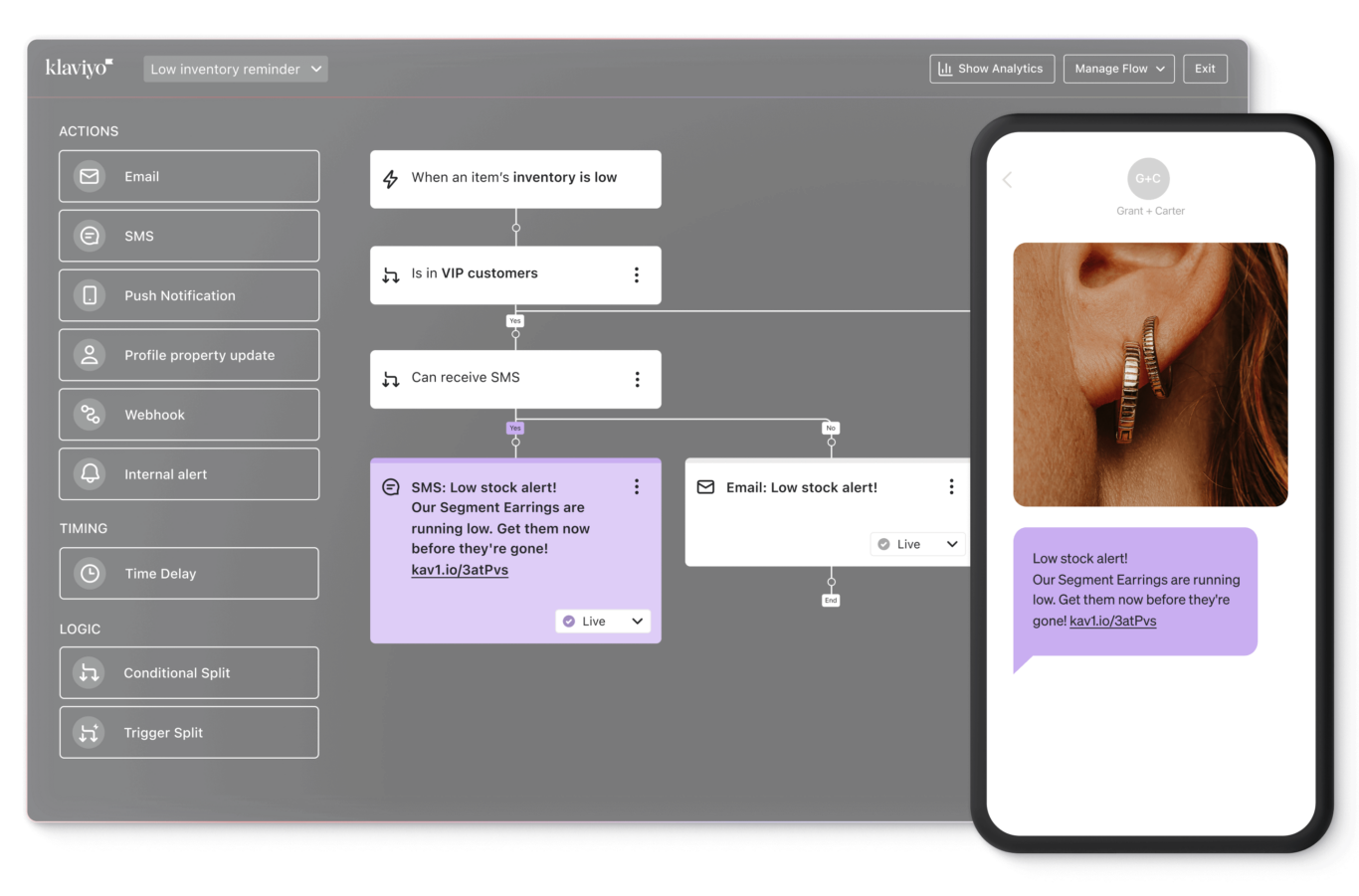
This dashboard view from Sender’s platform test shows what that control argument looks like in practice: SMS and email sit in one reporting surface, so one team can see which channel a subscriber actually responded to instead of reconciling two tools. Image credit: Sender.
On reach, you get both channels without a second contract. On cost, you are adding a channel to a tool you already pay for, which keeps the evaluation simple. The tradeoff is depth. A specialist may offer more SMS-specific tooling, so the question is whether SMS is going to become your main revenue channel or stay a supporting one. For most brands with a working email program, it stays supporting. Only if that changes does it make sense to bring in a dedicated SMS specialist.
Postscript: when SMS is the main event on Shopify
Postscript fits Shopify brands that want SMS to carry real weight rather than sit beside email. The catch is on the cost and control side. Postscript’s pricing page lists email as waitlist-only, so you should plan for a second email tool.
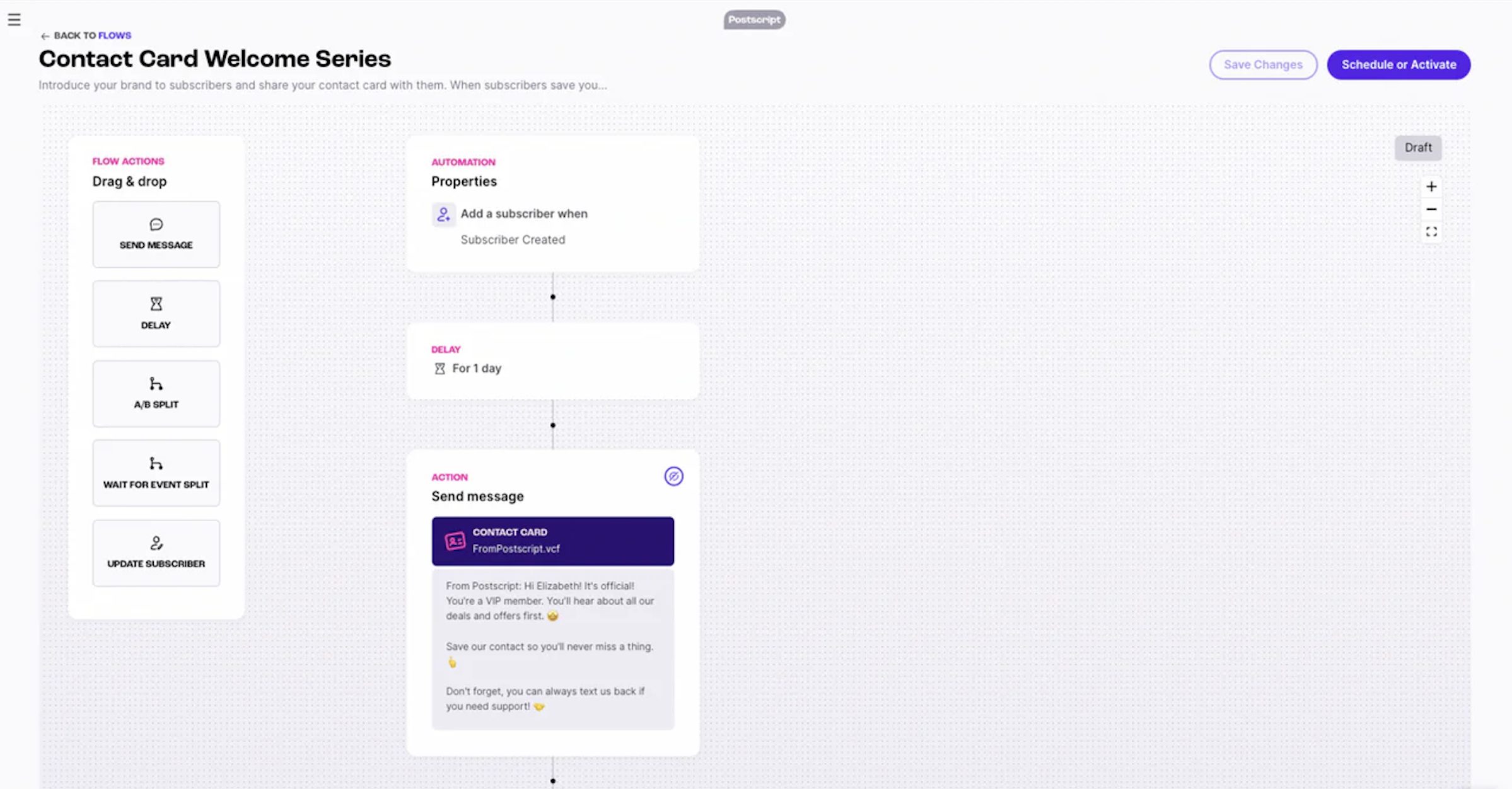
This Sender review screenshot of a Postscript trigger shows the Shopify-native side of that fit: the SMS flow starts from a store event rather than an imported list, which is why Shopify-first brands get depth here that generalist tools do not match. Image credit: Sender.
That second tool is not a footnote. If your SMS platform does not send email, you add two-tool sync and two attribution models. Both channels will claim credit for the same purchase, and your segments will drift apart unless someone owns the reconciliation. For a brand with an experienced retention team, that is manageable. For a lean team, it is a real operating cost that never shows up in the platform’s price.
Attentive: built for larger programs
Attentive’s own homepage frames the product around larger retail programs, which matches its custom-quote pricing model.
Attentive is the enterprise option in this set. According to Email Optimize, as of 10 October 2026, Attentive publishes no public prices. Quotes are custom, based on list size and messages sent. The text-only package is billed per message and by subscriber count, with discounts for bundling channels.
On reach, Attentive offers two-tap mobile sign-up and puts SMS, email, RCS and push in one contract. On control, compliance tooling and a dedicated support team come in every plan. AI add-ons are sold separately, some on a flat monthly fee and one pay-per-click, although a basic AI tier is included in every plan. The practical read: it is built and priced for larger programs, so it earns its place when message volume and revenue justify a custom contract. It is hard to justify for a brand still working out its first SMS flows.
Omnisend and Brevo: smaller budgets, fewer tools
For a smaller store with a tight budget that wants one tool, Email Optimize’s logic points to Omnisend Pro, or Brevo if your SMS sends are occasional. The appeal is consolidation: email and SMS from a single vendor without enterprise pricing.
The tradeoff is that you are choosing breadth over SMS specialization. That is fine when SMS is a supporting channel. It becomes a constraint if you later want deeper SMS-first sign-up tactics or heavier message volume. Check current plan limits and per-message rates on the vendors’ own pages before committing, since we have not verified them here.
Emotive and Recart: when you want the service bundled in
Some brands do not want another platform to staff. For them, Emotive, or Recart’s managed plans, bundle the service with the software. You trade some day-to-day control for capacity.
Ask the same question you would ask any managed provider: who decides when SMS fires, and how does that decision connect to your email calendar? A bundled service that plans SMS in isolation can end up duplicating what your email program already says. It is worth testing that coordination before you sign, not after.
SimpleTexting and EZ Texting: when you are not an online store
If you are not running an online store, SimpleTexting or EZ Texting are the logical shortlist. Ecommerce-specific flows like cart recovery and back-in-stock alerts are not what you are buying.
One compliance point matters if your audience is business buyers. Per Email Optimize, as of September 2026, B2B texting in the US is legal with consent, and there is no blanket business-to-business exemption. Marketing texts sent with an autodialer to a mobile number need prior express written consent under the TCPA, whether the phone is personal or a work mobile. Carrier rules and sender registration (10DLC, toll-free verification or short codes) apply to every program. Treat this as an operating summary, not legal advice.
The control question most platform lists skip
Control is not a feature on a comparison page. It is a set of decisions about when SMS speaks and when it stays quiet.
SMS is not an email reminder. The same offer sent by email and then by text shortly afterward is repetition, not amplification. SMS earns its place as the time-sensitive nudge when urgency is genuinely high and the window is short: flash sales, shipping updates, restock alerts and loyalty milestones. Overuse has a cost, in both send fees and customer patience.
Winback is a good example. For customers with an SMS opt-in, SMS plays a supporting role: a shorter, higher-urgency touchpoint after the email sequence has run without a response. It is not a parallel winback sequence. We cover that sequencing in our Shopify winback email strategy guide, and the broader channel logic in what channels make a good ecom retention strategy.
The same discipline applies to sequencing. A team that wants to launch SMS, push notifications and a loyalty program at once, before email is working, is putting scope over impact. A platform with the right features cannot fix that.
Where Retention Side fits
Retention Side does not sell an SMS platform, and that is the point. We are a Klaviyo-first retention agency. Email via Klaviyo is where the system starts, and what comes next depends on what audience behavior data shows and where the most cost-effective coverage gaps are. SMS is one of those options, alongside push notifications, direct mail, loyalty programs, WhatsApp and Viber. Our service page lists SMS marketing among the channels we cover.
That is why we treat the platform choice as a system decision. For most brands, it means staying inside Klaviyo until the data says otherwise, then adding a specialist deliberately and designing the sync and attribution before launch. If you want SMS planned that way, talk to Retention Side about your current email and SMS setup. We report improved returning customer rates and email-attributed revenue across client engagements, but those are agency-reported, not SMS-specific, and not independently verified.