
Email marketing for
home & kitchen brands
Help customers get more from their first purchase and discover the next useful addition to their home, without irrelevant reorder pressure.










your biggest
challenges
THE EXPERIENCE STARTS AT DELIVERY
Ownership can start with practical friction. Dimensions, assembly, installation, or cleaning uncertainty can turn an expected improvement into a support issue. A poor first experience can reduce confidence in another order.
REPLACEMENT CYCLES ARE LONG
Durable products do not create frequent replacement demand. Furniture and cookware may not need replacing for years. A short-term repeat target can therefore misread customer satisfaction and the catalog’s true buying cycle.
STYLE AND COMPATIBILITY MATTER
An accessory must fit the item and the space. Wrong dimensions, finishes, or connections can make a recommendation unusable. Incompatible purchases increase return risk and undermine trust.
A SINGLE PURCHASE ENDS THE JOURNEY
A room project can stop after the first item. Budgets, uncertainty, and changing plans can interrupt a broader purchase. The brand can lose the next stage of the project even when the first product was well received.
We Solved
This Before
Our published Voden result is a 22% lift in cross-category buyers over six months. It appears in our client-results overview and measures customers expanding their purchases across the range, rather than ordering a replacement for the same durable item.
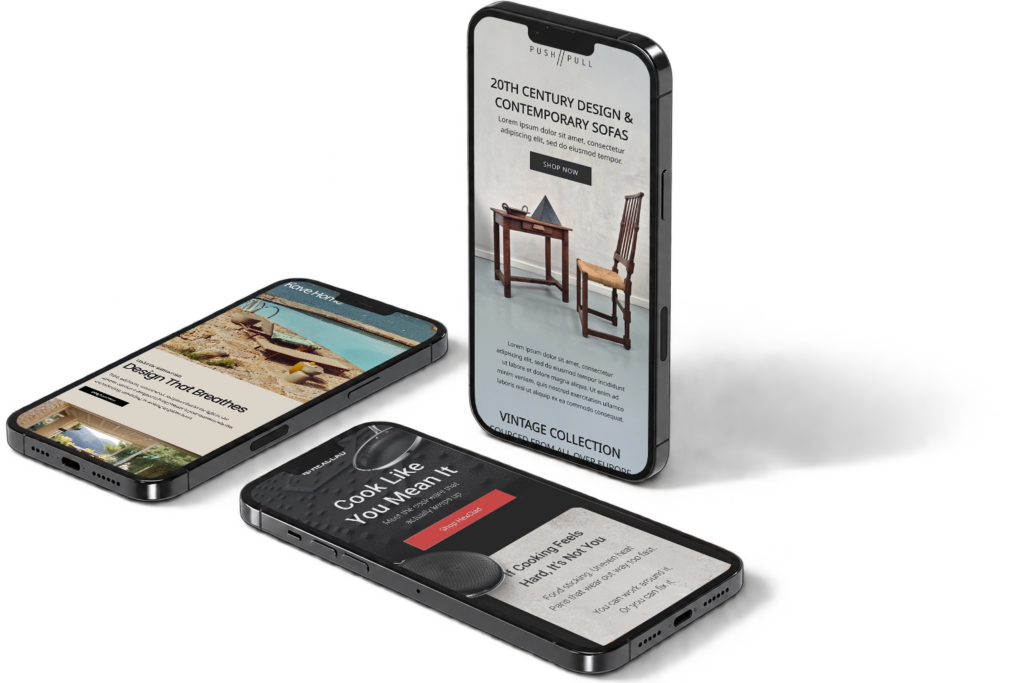
Our Voden creative includes product education and everyday-use ideas across the home range. That is the practical role of a connected retention system in this category: make the first product useful, help customers understand another relevant use or category, and give the next purchase a reason to happen. The published result measures that broader buying behavior; the creative shows the communication behind the approach.
our Process
Research & Discovery
Distinguish durable purchases from products that run out.
We group the catalog by durable goods, complementary items, and products that run out. Order paths, delivery questions, dimensions, and return reasons reveal which relationships can support a useful next purchase.
The audit establishes baseline purchase windows and records the catalog data needed for matching products. Priorities are ranked by customer friction and commercial impact, with a clear distinction between information gaps and opportunities to complete a project. See our email marketing service for the delivery scope.
Activities
Durable vs Refill Product Mix
Delivery & Setup Content Audit
Room & Category Purchase Paths
Size & Compatibility Data
Project Purchase Analysis
Support & Return Feedback
Deliverability & Data Audit
Outputs
A clear distinction between durable and replenishable products.
Identified delivery, setup, and compatibility questions.
A view of how customers move between related product categories.
A roadmap for useful follow-up through the product's ownership cycle.
Customer Journey Workshops
Walk through delivery, setup, and everyday use.
We map delivery, first use, a support issue, and the next project step for representative products. A cookware refill and a considered furniture addition receive separate journeys because their decision and ownership milestones differ.
Product, service, and marketing owners agree which specifications must be available and when a recommendation should pause. The deliverable is an actionable map of handoffs, eligibility, and content requirements for the build.
Activities
Delivery Preparation Mapping
Assembly & Setup Friction
Everyday Use Journey
Care & Maintenance Planning
Room & Kitchen Project Paths
Relevant Add-On Review
Outputs
Mapped guidance for delivery, setup, and everyday use.
Clear support routes for installation or product questions.
A plan for care and the next step in a home project.
Relevant add-on opportunities without premature replacement pressure.
Implementation & Execution
Help customers use what they bought.
Delivery-aware journeys provide setup and care guidance for the purchased item. Campaigns can combine a kitchen task or room idea with products that work together, including dimensions and compatibility details. Refill reminders apply to consumables. Durable products receive care, complementary-item, and project follow-up based on ownership and expressed interest.
We check product relationships, availability, and the links customers follow from each message before launch. Care guidance and relevant ideas remain connected to the original purchase, while recommendations build on a real task or project.
Activities
Delivery-Aware Guidance
Setup & Product Care Flows
Room & Style Preference Capture
Compatible Add-On Journeys
Refill Reminders Where Relevant
Category Cohort Tracking
Outputs
Product-specific preparation, setup, and care communication.
Recommendations grounded in size, finish, and compatibility.
Refill journeys limited to products that are actually consumed.
A baseline for repeat purchases by project and category.
Continuous Optimization
Test usefulness through the next purchase and the support experience.
We compare setup content against recurring questions and return reasons, then review which complementary recommendations lead to repeat orders. Basket margin and product ownership keep the next test commercially relevant.
We also separate replenishable categories from long-life products when assessing results. That prevents a slow replacement cycle from masking useful accessory or project purchases and helps the next campaign reflect how the home actually evolves.
Activities
Setup Content Tests
Project Timing Experiments
Add-On Compatibility Review
Refill Window Optimization
Next-Category Order Analysis
Margin & Revenue Tracking
Outputs
Evidence on guidance that helps customers use their purchase.
More relevant project and add-on communication.
Clear decisions on refill timing and category segments.
A next-test plan based on useful repeat orders and margin.
HOME & KITCHEN
CUSTOMER LIFECYCLE MAP
The handoff after checkout is from purchase confidence to ownership. Delivery, assembly, and care form one stage; completing the room, kitchen task, or refill need forms the next. A compatible addition advances the project, while a support issue pauses recommendations until the original purchase works as expected.
Explore cart recovery for considered room and kitchen purchases.
BEEN THERE DONE THAT
Why should
you care?
The next room or useful accessory can extend the value of the first order.
What commercial progress looks like
F1-to-F2 conversion
The next complementary, project, or refill order.
Purchase frequency
Repeat orders measured by product category.
Customer lifetime value
Customer value across room projects and catalog categories.
Contribution margin
Order value after product costs, delivery, and returns.
A customer may keep a sofa or cookware set for years, so retention cannot depend on frequent replacement. Its value lies in earning the next complementary purchase, refill, or room project after the original item has proved useful.
Different product groups need different measurement windows. F1-to-F2 conversion can reveal whether a first purchase leads to another useful item; purchase frequency and cross-category orders show how the relationship expands. Customer lifetime value captures later projects that a short campaign reporting window would miss.
The economics of a project matter as much as the size of its basket. Heavy delivery costs, returns, and discounts can reduce contribution margin on a seemingly successful second order. Relevant second-purchase journeys should develop the customer’s project without encouraging incompatible additions or unnecessary replacements.
What commercial progress looks like
F1-to-F2 conversion
The next complementary, project, or refill order.
Purchase frequency
Repeat orders measured by product category.
Customer lifetime value
Customer value across room projects and catalog categories.
Contribution margin
Order value after product costs, delivery, and returns.
ECOMMERCE
CLIENT RESULTS
We measure repeat purchase rate, conversion from the first order to the second, customer lifetime value, purchase frequency, and contribution margin. Our client reporting connects those business outcomes with campaign and lifecycle-flow performance, rather than judging success by opens or clicks alone.
Who this is/ISN’t for
Home and kitchen brands are a strong fit when they can support product ownership and recommend a useful next step for the customer’s space or task.
STRONG FIT
1. BRANDS WITH A PROVEN ACQUISITION ENGINE
You have established demand and a catalog with clear relationships between products, projects, or refills. We can use order history to understand what customers need after the first purchase.
2. WILLING TO IMPROVE THE FULL FUNNEL
You are willing to improve dimensions, compatibility information, delivery guidance, and setup support. Email performs a useful role when the product page and ownership experience answer the same practical questions.
3. TEAMS THAT KEEP CHALLENGING THEMSELVES
Your team can share product expertise and test recipes, care guides, room ideas, or complementary recommendations. Feedback and purchase paths help us choose the most useful direction.
NOT A FIT
1. RETENTION BEFORE ACQUISITION
If the core products have not found consistent demand, focus on that and acquisition first. A follow-up campaign cannot solve a product that does not meet the customer’s needs.
2. SET-AND-FORGET MENTALITY
New products, availability, and support questions need ongoing updates. A fixed sequence can miss setup problems or keep recommending an attachment that no longer fits the range.
3. COMFORT OVER PROGRESS
If durable items must be promoted as frequent replacements regardless of ownership, messages will lose relevance. We need realistic product cycles and freedom to focus on care, projects, or suitable additions.
Before working with Retention Side, most of our growth came from paid ads. When ads were performing, things looked good. When they weren’t, cash flow got tight pretty quickly. Over the past months, our repeat customer rate moved close to 40%, and that changed how the business feels. Revenue is still seasonal, but it’s far less stressful.

Founder · Beauty & Skincare
Nevena Komazec
Frequently Asked Questions
How do you drive repeat orders for products designed to last?
Base the next recommendation on the job the first item performs. A cookware buyer may need a compatible lid or utensil, while a furniture buyer may be completing a room. Check dimensions, materials, and product relationships before choosing the message. Refills and durable products should have separate follow-up rules.
What should customers receive before a home-product delivery?
Relevant information about dimensions, preparation, assembly, or installation, drawn from verified product instructions. Timing should follow delivery events where available, and support should be easy to find if expectations are unclear.
How do you make home and kitchen recommendations more relevant?
Use the purchased product’s size, finish, compatibility, and category alongside preferences the customer chooses to share. Recommend a coherent next step rather than assuming one purchase means the customer wants an entire room replaced.
When are replenishment flows appropriate for home brands?
Use them for products customers consume, such as relevant refills or care supplies, based on observed usage and reorder behavior. Furniture, cookware, and other durable items need care or accessory journeys instead.
Which outcomes show that home and kitchen retention is working?
Review next-order and cross-category behavior over realistic project windows, compatible add-on purchases, refill performance where relevant, customer feedback, and margin. Interpret results separately for durable and consumable product groups.
Build your next stage of
customer growth.
Build your next stage of
customer growth.
Bring your customer journey, account data, and commercial goals. We’ll identify the retention opportunities that fit your products and buying cycle.