Build a clearer path from the first order to the next with product education, relevant recommendations and well-timed email journeys.
We investigate what buyers need after delivery, then build the guidance, refill reminders and product recommendations that make a second purchase feel natural.









A low second purchase rate means too few first-time buyers place a second order within a defined period. Calculate it as first-time buyers who make a second purchase ÷ all first-time buyers in the same cohort × 100. For example, 20 second orders from 100 first-time buyers means a 20% second purchase rate.
There is no single “low” threshold for every store. Compare cohorts over the same time window and account for your category, product usage and replenishment cycle. Buyers may need help using their purchase, knowing when to refill or choosing a relevant next product.
Why repeat purchasing matters: nude & rude’s founder reports that its repeat customer rate moved close to 40% while working with Retention Side. This is a client-reported repeat customer metric, not a second-purchase benchmark or guaranteed result. Read the client’s review.
We map the gap between the first order and the next, understand why that gap is happening in the first place, then build education, recommendations and timing around what customers need. Explore our guide to increasing repeat purchases for product education, buying-cycle research and practical next steps.
We review purchase history, product paths and time between orders to identify where first-time buyers stop returning.
Research, customer questions and product usage inform the education, refill or cross-sell path each group needs.
We write, design and build messages that help buyers use their purchase and discover a relevant next product.
Purchase history, browsing, engagement and customer preferences shape who receives each message and when.
We test timing, creative and offers, then evaluate second purchases and time between orders rather than treating opens as the goal.
We review the account, existing messages, purchase history, product mix and customer journey. Customer support questions and research help explain what the numbers cannot.
You get a prioritized view of the gaps to address first, rather than another flow added without a clear purpose.
We map what happens after delivery: how customers use the product, when they may need a refill and what a relevant complementary purchase looks like.
The output is a journey and segmentation plan that connects each message to a customer need and a business outcome.
We turn that plan into email copy, design and automation, with clear triggers, exclusions and paths for different buyers.
We check deliverability and coordinate supporting channels so customers receive one coherent journey. See our email marketing service for the wider scope.
We test timing, messages, creative and offers against purchase behavior. Reporting tracks second-order conversion and time between orders for relevant groups.
We use those findings to improve the journey over time. The measurement window follows your product and buying cycle; there is no universal target or guaranteed uplift.
Give customers you have already paid to acquire a relevant reason to return.
Help buyers get value from the first product before introducing the next one.
Connect customers with complementary products or refills that fit their needs.
Test education, relevance and timing before making the same promotion your default.
Research, strategy, copy, design and automation follow the same customer milestone.
Know which changes deserve more investment by measuring buying behavior.
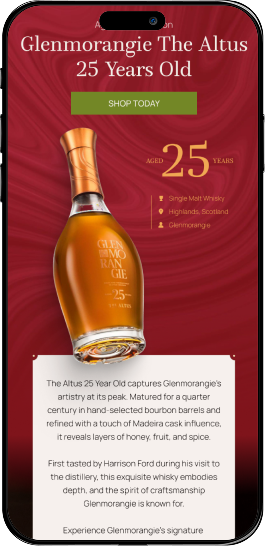
The Hedonism Wines email shown alongside this section brings product storytelling and relevant selections into the customer’s next interaction with the brand. Retention Side redesigned the emails for mobile and dark mode as part of a wider rebuild.
The engagement combined a Mailchimp-to-Klaviyo migration with product-interest segmentation and flows. The case reports email revenue growth of over 500% since October 2025 across that wider program.
Before working with Retention Side, most of our growth came from paid ads. When ads were performing, things looked good. When they weren’t, cash flow got tight pretty quickly. Over the past months, our repeat customer rate moved close to 40%, and that changed how the business feels. Revenue is still seasonal, but it’s far less stressful.

Founder
Nevena Komazec
Before Retention Side, 90% of our sales came from one-time buyers. Now returning customers drive most of our revenue, and checkout abandonment emails alone add 5 figures each month.

Founder
Faraz Zaidi
These testimonials are reproduced from our client reviews. They describe individual client experiences, not a forecast for your brand.
Tell us what customers buy first, what you want them to buy next and where repeat purchasing slows down. We will discuss your current setup, the gaps worth investigating and whether Retention Side is the right partner.
Start with a conversation about your brand, products and customer journey.
A customer’s next completed order after their first. The measurement window should reflect your products and normal buying cycle, so we do not compare every brand to one universal benchmark.
We examine first-time buyer cohorts, product paths, time between orders, existing post-purchase messages and the segments receiving them. That shows whether the main issue is timing, relevance, education or something else.
Not necessarily. Product guidance, relevant recommendations and well-timed reminders may create a stronger reason to return. Promotions should be a deliberate choice, not the default message for everyone.
Email usually provides the core post-purchase journey. SMS, loyalty or other channels can support it where they fit the customer, the product and consent. The plan should work as one journey rather than disconnected sends.
A win-back campaign usually targets customers who have become inactive. This page focuses on the period after a customer’s first order, before they have made a second purchase.
Understand product education, lifecycle flows, buying cycles and the metrics behind repeat purchasing.
See the documented platform, segmentation, email design and flow work behind the client’s email program.
Explore Retention Side’s research, strategy, segmentation, automation and ongoing testing services.
Join Our List
Practical retention strategies we implement for our clients, shared weekly!
Check your email, resource is on it's way! If you don't see it, check Spam (shame on us - but it is new account)