Retention systems built for fashion brands to stay top of mind between drops, increase repeat purchases, and support inventory velocity.










Fashion brands often experience revenue spikes around drops or seasonal launches, followed by slow periods in between. Without a structured retention system, customers engage only when new collections arrive, making revenue inconsistent and overly dependent on constant newness.
Many fashion brands rely heavily on discounts to move inventory. Over time, customers get trained to wait for promotions, reducing perceived brand value and squeezing profit margins. Without smarter retention strategies, sales become promotion-dependent rather than behavior-driven.
Sizing uncertainty and inconsistent fit often lead to high return rates and customer hesitation. Without proactive communication, fit guidance, and post-purchase support, customers lose confidence in ordering again. Returns increase operational costs, while repeat purchase rates suffer due to unresolved sizing concerns.
Customers may love a brand but disengage between collections. Without consistent communication, styling inspiration, or product reminders, the brand fades from memory until the next launch, increasing acquisition costs and reducing repeat-purchase frequency.
We’ve seen these patterns across fashion brands — revenue tied to launches, customers waiting for discounts, and hesitation caused by sizing uncertainty. Instead of pushing more campaigns, we rebuilt the retention structure: clarified fit communication, aligned messaging with drop cycles, and improved post-purchase sequencing. The result was lower return rates, stronger repeat purchases, and steadier revenue even between major releases.
This stage focuses on understanding how your fashion brand operates across collections, drops, and seasonal cycles.
We analyze how customers discover your products, how they move between categories, what drives first purchases, and what prevents repeat orders.
Special attention is given to sizing behavior, return patterns, and collection performance to uncover real retention opportunities rooted in buying behavior.
Activities
Brand & Product Analysis
Purchase Cycle Review
Purchase Pattern Review
Segment Assessment
Market & Category Research
Competitor Analysis
Size & Return Pattern Analysis
Outputs
Clear understanding of how customers buy across drops and seasons.
Identified friction points affecting repeat purchases and return rates.
Insight into sizing behavior and its impact on retention.
Data-backed opportunities to improve sell-through and customer lifetime value.
This stage is a workshop-driven breakdown of the fashion buying experience, step by step.
We map what customers see, think, and hesitate about across key moments: product discovery, PDP evaluation, sizing decisions, checkout, delivery, and the return/exchange experience.
The goal is to pinpoint exactly where confidence drops and what information is missing, then define the retention touchpoints that remove hesitation and improve the odds of a second purchase.
Activities
Journey Step Mapping
PDP Friction Review
Size Confidence Mapping
Checkout Hesitation Analysis
Post-Purchase Experience Audit
Returns & Exchange Journey Review
Outputs
A clear list of the exact steps where customers lose confidence and drop off.
Defined fixes to reduce sizing hesitation and improve decision clarity.
Improved post-purchase journey designed to reduce returns and increase repeat orders.
A retention touchpoint plan tied to real journey friction, not generic campaigns.
At this stage, strategy turns into live execution.
We build the retention infrastructure around your collection calendar, ensuring each drop, restock, and post-purchase moment is supported by structured communication.
Instead of sending isolated campaigns, we create connected systems that guide customers from first purchase to repeat order while supporting inventory movement and margin protection.
Activities
Zero Pary Data Management
Restock & Low-Stock Sequences
Lifecycle Flow Implementation
Quarterly Campaign Planning
KPI Definition & Tracking
Account Pulse Monitoring
Outputs
Clear segmentation based on size preferences and purchase intent from managed zero-party data.
Lifecycle flows that support first purchase, second purchase, and collection re-engagement.
Defined performance metrics tied directly to drop performance and repeat revenue contribution.
Fashion performance shifts with every collection, restock, and promotional window.
This stage focuses on improving results at the level of drop execution, discount timing, and inventory movement.
Instead of testing randomly, we evaluate how each of these contributes to repeat purchases and full-price sell-through.
Adjustments are made to protect the margin while improving engagement across seasonal cycles.
Activities
A/B Testing Execution
Discount Impact Testing
Launch Timing Experiments
Flow & Campaign Refinement
Repeat Purchase Cohort Analysis
Revenue Contribution Tracking
Outputs
Improved sell-through across launches and restocks.
Smarter promotional use based on real margin impact.
Higher repeat purchase rates across seasonal cycles.
Clear understanding of how retention influences drop revenue performance.
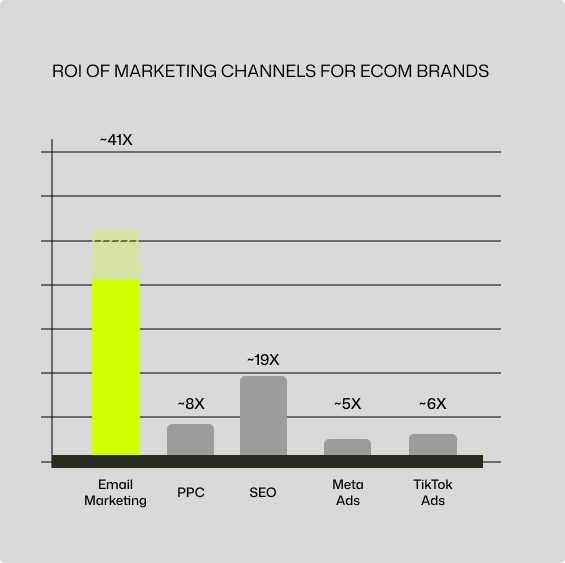
Market trends and data are clear — profit margins are shrinking. For years, brands scaled easily through paid channels like Meta, Google, and TikTok, often turning $100 in ad spend into $1,000 in revenue due to high ROI and low competition.
As platforms matured, competition increased and algorithms evolved to favor platform profit over advertiser returns. Add COVID, shipping issues, inflation, and rising production costs, and margins have been declining year after year. Today, many brands are no longer profitable on the first purchase because of high CPA, and there are no signals this will change.
That’s why we believe retention channels, especially email marketing, will become the main revenue drivers. They allow brands to grow by converting existing customers at a much lower cost, making retention essential for long-term survival.
Our Klaviyo account was a mess. Retention Side understood main issues in our industry and optimize our communication to reduce returns and increase LTV. Now our flows convert 3–4x better.

Founder
Louise Elia
Before Retention Side, 90% of our sales came from one-time buyers. Now returning customers drive most of our revenue, and checkout abandonment emails alone add 5 figures each month.

Founder
Faraz Zaidi
Clear size guidance, proactive reassurance messaging, and post-purchase communication significantly reduce hesitation and incorrect orders. By addressing fit concerns before and after checkout and communicating them properly, brands can lower return rates while increasing customer confidence in reordering.
In fashion, customers often buy around specific moments, a drop, a trend, or a seasonal need. On the other side, brands forget that they are trend setters.
Build structured post-purchase follow-up, styling inspiration, or re-engagement tied to future collections. Retention turns one-time buyers into returning customers by extending the buying journey beyond the initial drop.
Fashion brands need to offer more than product announcements.
Between launches, engagement comes from inspiration, styling guidance, trend insights, and showing customers how pieces fit into real life.
When a brand positions itself as a source of ideas, not just inventory, customers stay connected even when they’re not actively buying. This builds authority, keeps the brand culturally relevant, and increases the likelihood of returning for the next drop.
Retention should support the full lifecycle of a collection — before launch, during peak demand, and after initial momentum slows.
Pre-launch communication builds anticipation, drop messaging drives urgency, and post-launch sequencing extends the lifecycle through restocks, cross-sells, and repeat purchase triggers.
This prevents revenue from being concentrated only in launch windows.
Initial performance improvements can often be seen within the first launch cycle after implementation. More meaningful gains in repeat purchases and margin stability typically compound in the first 120 days as customer behavior shifts.
Join Our List
Practical retention strategies we implement for our clients, shared weekly!
Check your email, resource is on it's way! If you don't see it, check Spam (shame on us - but it is new account)