A retro marketing channel that leaves a lasting impression far beyond the screen.

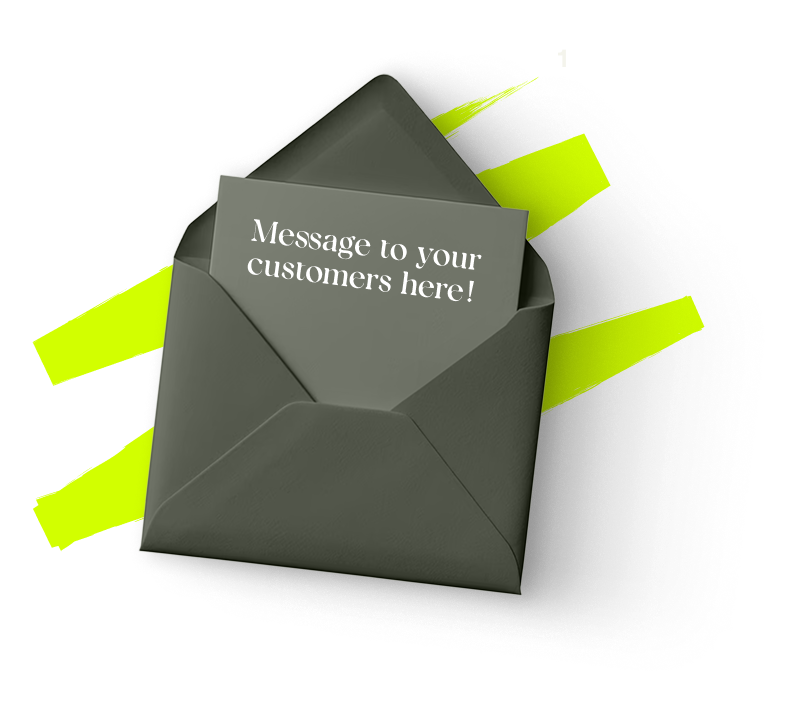
Well-executed direct mail signals intent, care, and investment, reinforcing a high-quality brand image and increasing perceived value.
Direct mail reaches customers who have already shown intent, making it a powerful reactivation tool rather than a volume-based acquisition channel.
While inboxes and phones are crowded, physical mail arrives with almost zero competition, instantly standing out from everyday digital communication.
Direct mail is fully independent of platforms, inbox rules, deliverability changes, and algorithm shifts, giving brands full control over reach and timing.
Direct mail is a high-impact but high-cost retention channel, which is why it must be approached with precision. This phase focuses on evaluating feasibility, defining the right audience size, and understanding cost-to-impact before anything is sent. The goal is to determine whether direct mail can deliver meaningful ROI for your brand, and if so, how to structure it strategically rather than experimentally.
Activities
Segment Size & Volume Analysis
Cost Structure Assessment
ROI & Break-Even Modeling
Use Case Prioritization
Strategy Definition
Outputs
Clear validation of whether direct mail is financially viable for your brand.
Defined audience segments where direct mail can create the highest impact.
Realistic cost and ROI expectations before execution.
A focused direct mail strategy built for intentional use, not experimentation.
Once feasibility is confirmed, this phase focuses on creative execution and controlled testing. We design physical mail concepts and offers that fit your profit margins, test them with selected segments, and scale only what proves to work. The goal is to move from small, high-signal tests to a repeatable direct mail program aligned with quarterly and annual retention goals.
Activities
Creative Concept Development
Offer & Incentive Design
Format & Material Selection
Initial Test Campaign Execution
Performance & Response Analysis
Scaling & Rollout Planning
Outputs
Direct mail creatives that stand out and align with brand positioning.
Validated offers with measurable response and impact.
A clear framework for scaling without losing effectiveness.
A structured plan for quarterly and annual direct mail initiatives.
This phase focuses on extracting learnings from executed campaigns and using them to improve future initiatives. We analyze real outcomes from Phase 2, identify what delivered impact versus what didn’t, and eliminate unnecessary costs. Based on these insights, direct mail is refined and strategically integrated with Email, SMS, and Loyalty Programs to support key moments across the retention calendar.
Activities
Performance & Response Analysis
Cost vs Impact Evaluation
Budget Optimization & Waste Reduction
Email & SMS Integration Planning
Loyalty Program Alignment
Outputs
Clear understanding of what direct mail actually drives for the business.
Reduced costs by cutting low-impact formats, offers, or segments.
More effective future campaigns built around proven learnings.
A coordinated retention setup where direct mail amplifies Email, SMS, and Loyalty efforts.
We are covering all Retention Channels in the eCommerce industry.
Every Thursday, we share a strategy or insight we’ve discovered while working with top 1% eCommerce brands. Some sell this knowledge through courses, others lock it behind monthly retainers, and some don’t even know it exists. We share it for free, every week.
Direct mail works best at high-impact moments, such as customer reactivation, VIP retention, post-purchase milestones, or key seasonal events. It is designed for intentional touchpoints, not continuous communication.
ROI is evaluated based on incremental impact, not volume.
We look at response rates, reactivation lift, repeat purchases, and downstream revenue, while factoring in production and shipping costs. Direct mail is treated as a precision investment, not a scale channel.
Direct mail is never used in isolation.
It supports and amplifies digital channels by creating a physical moment that Email and SMS can build on before and after delivery. This coordination increases overall impact without increasing digital message volume.
Direct mail should be used sparingly and strategically.
Most brands benefit from a limited number of well-planned mailings per year, aligned with important campaigns or lifecycle moments, rather than frequent sends that dilute impact and increase costs.
Direct mail should be considered only after a brand has stable acquisition, a solid retention foundation, and enough customer volume to segment effectively. Without clear audience segments and margin visibility, direct mail becomes expensive noise rather than a strategic investment.
Join Our List
Practical retention strategies we implement for our clients, shared weekly!
Check your email, resource is on it's way! If you don't see it, check Spam (shame on us - but it is new account)