
The Client
Hedonism Wines is one of London’s most recognized fine wine and spirits boutiques. Established in 2012 and based in Mayfair, they stock over 6,500 wines and 3,000 spirits sourced from around the world, and ship globally.
After more than a decade in business, they have built a loyal customer base that knows exactly what it wants, and expects the brands they buy from to know it too.
The Challenge Explained
The fine wine and spirits retail industry is dealing with several compounding problems that make sustainable growth genuinely difficult.
The first is advertising. Alcohol retail is one of the most restricted verticals in digital marketing. Meta, Google, TikTok – all of them apply strict limitations on who can advertise, how, and to whom. Geo-restrictions, age-gating requirements, and flat-out rejections are standard. Brands in this space cannot rely on paid acquisition the way most eCommerce businesses do. When the primary growth lever is locked, everything else has to work harder.
The second is margins. Fine wine and spirits retailers are curators, not producers. They source from wineries, distilleries, and estates, which means margins are set upstream. There is no manufacturing cost to optimize, and limited room to compete on price without hurting the business. Every wasted marketing spend is felt directly at the bottom line.
The third is catalog complexity. Selling 10,000+ SKUs across wines, spirits, and rare collectibles is not a standard eCommerce problem. Each product has its own origin, producer, vintage, and buyer profile. Matching the right product to the right customer at scale requires genuine expertise built into the marketing logic, not just a recommendation widget. Without that, a 10,000 SKU catalog is not an asset. It is overwhelming.
That pushed everything onto owned channels. Hedonism had a 100,000+ subscriber list built over more than a decade. But sitting on Mailchimp with no real segmentation behind it, it was being used as a broadcast tool, not a revenue channel.
Our Solution
The challenge with Hedonism was not finding an audience. The audience was already there. The challenge was building the infrastructure to use it properly.
1. Migration from Mailchimp to Klaviyo
The first move was getting Hedonism off Mailchimp and onto Klaviyo. For a business with 10,000+ SKUs and a subscriber base with strong, specific product preferences, Mailchimp creates a ceiling fast. The segmentation depth is not there. The flow logic is limited. A customer who regularly buys aged Burgundy was getting the same emails as someone who just picked up their first Japanese whisky.
Before moving a single contact, we audited the full list, flagged, and removed unengaged segments. Moving a dirty list into a new platform just means paying more to send emails that damage your deliverability. We did not do that.
2. Deliverability Recovery
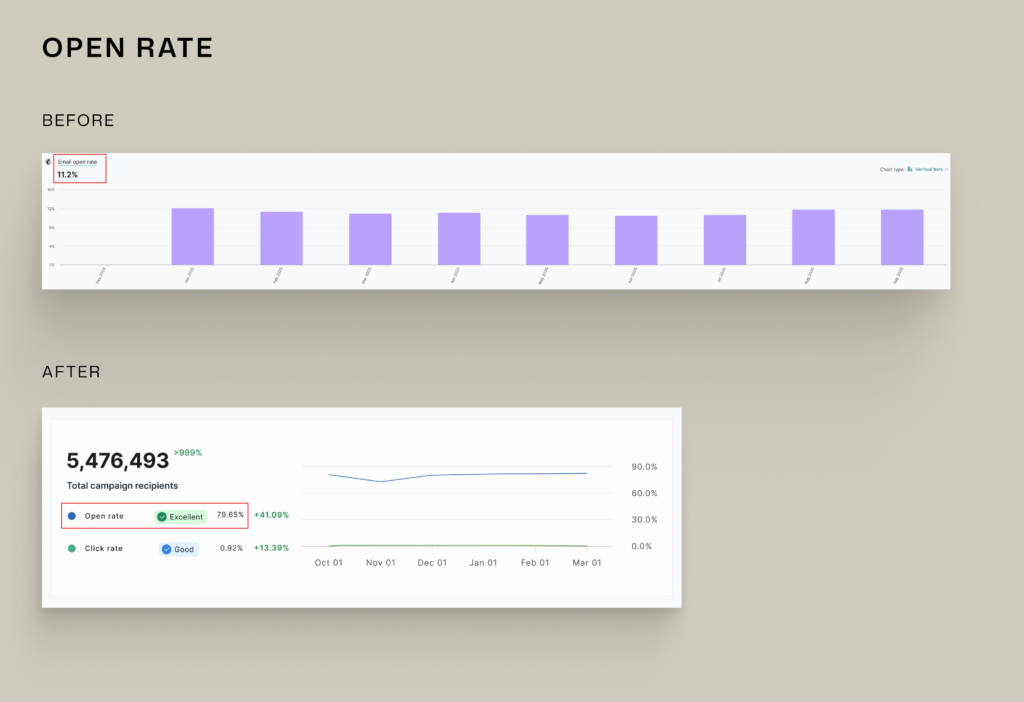
Before any flow was built or campaign was sent, we had to address the most fundamental problem in the program – deliverability. Between January and September 2025, Hedonism’s average open rate was 11.2%. The emails were not reaching inboxes.
List hygiene came first – removing hard bounces, suppressing chronically unengaged contacts, and reducing send volume while reputation recovered. On top of that, migrating from Mailchimp to Klaviyo meant starting with a new sending domain and IP, which requires a proper warm-up process. We built a structured warm-up schedule, gradually increasing send volume to the most engaged segments first, letting inbox providers build trust with the new infrastructure before scaling back up.
Sending less to the right people beats sending more to everyone, every time.
The results were significant. From October 2025 through March 2026, average open rates reached 79.65%. The list did not get bigger. The audience did not change. The emails just started actually landing.
3. Segmentation by Product Interest
This is where the program started to do something different. Hedonism’s catalog is organized around producers, regions, styles, and vintages, and their customers shop that way. We built segmentation logic around actual behavioral signals – browse activity, purchase history, category affinity, and producer interest.
Conditional splits in flows and campaign segmentation now mean that a customer who regularly engages with Italian wines gets content that reflects that. Someone exploring single malts gets a completely different experience.
This does two things at once. It increases relevance, which drives revenue. It also protects deliverability because engaged subscribers open and click rather than ignoring or unsubscribing.
4. Email Design Overhaul
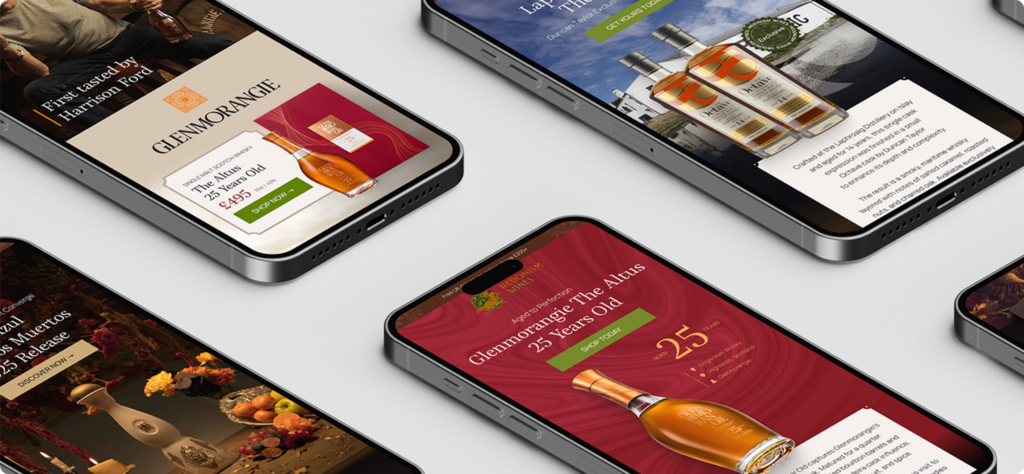
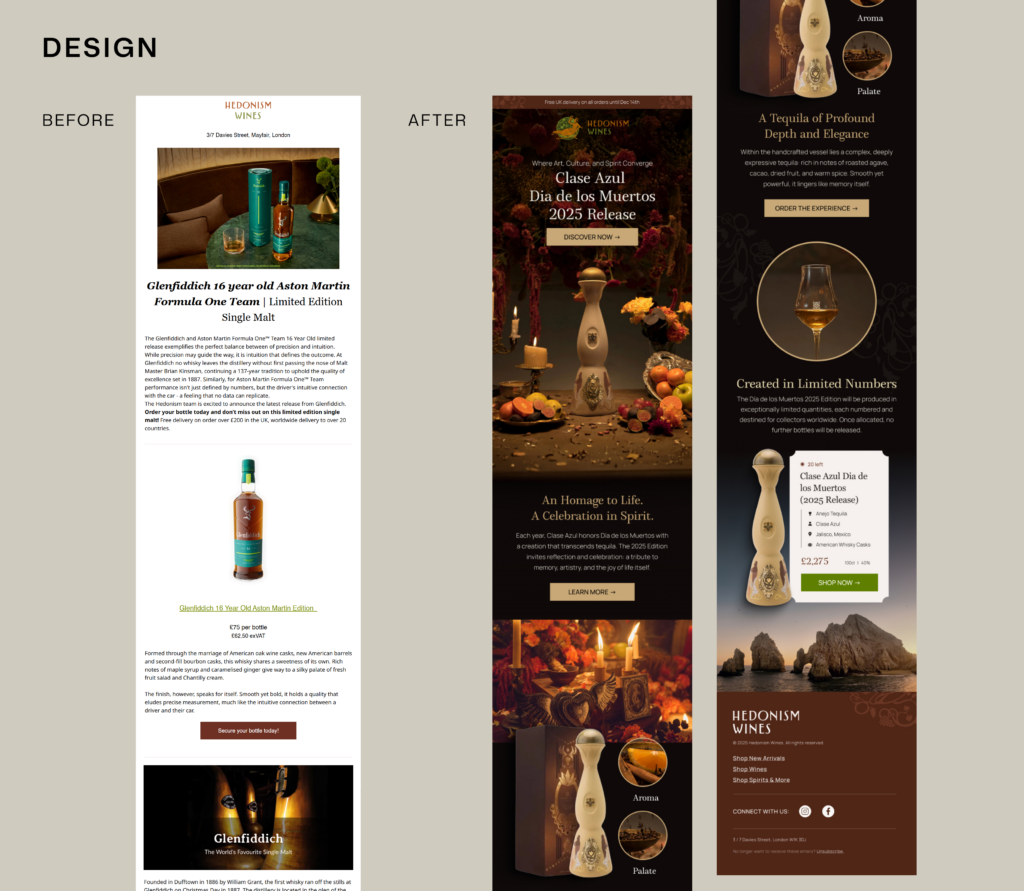
The previous design was not doing the product justice. Fine wine and spirits is a visually rich category – bottle design, label art, origin imagery are all part of the purchase decision. The old emails buried that under walls of text, with no mobile optimization and no consideration for dark mode.
We rebuilt the design system from scratch. Mobile-first layout, dark mode compatibility, and a visual hierarchy that puts the bottle and the key details front and center. Each email now uses design to do the selling work, not just to frame it.
5. Flow Architecture
With the platform, list, and design in place, we turned to flows. Given the advertising restrictions this industry faces, acquisition-side flows were the immediate priority – capturing and converting every intent signal that paid channels could not reach.
Welcome Series – Setting expectations for new subscribers, introducing the catalog depth, and starting to capture preference signals early.
Browse Abandonment – With 10,000+ SKUs, there is a lot of browsing behavior. Capturing that intent with timely, relevant follow-up is a straightforward revenue play that was not being used before.
Add to Cart and Checkout Abandonment – At Hedonism’s average order value, an abandoned cart is not a small miss. These flows are built to follow up with the right urgency and the right content.
We are currently building out cross-sell flows tailored to the full 10,000+ SKU catalog. At that scale, the logic has to be smart enough to recommend across categories in a way that feels curated, not automated. It is the most complex part of the program and the one with the most upside.
The Results
Email revenue increased by over 500% since the engagement began in October 2025.
What makes that number meaningful is the context. This is not attribution shuffling. The revenue growth from email tracked a real increase in overall business revenue. Email became an incremental growth channel, not a reallocation of credit from other sources.
The 100,000+ subscriber list that existed before we arrived is now functioning as the asset it always had the potential to be. Deliverability is strong because the list is clean, and segmentation keeps engagement rates high. Campaigns reach inboxes. Flows convert.
The Takeaway
For brands in restricted advertising verticals, owned channels carry more weight than in any other industry. You cannot buy your way to growth the same way others can. That makes a poorly run email program more than a missed opportunity. It is a direct competitive disadvantage.
Hedonism had the audience. What was missing was the infrastructure to use it properly. Platform, segmentation, design, and flow architecture – get those four things right, and the numbers follow.