
Push Notification
for eCom brands
Enable lightweight re-engagement by reaching customers without requiring inbox commitment.

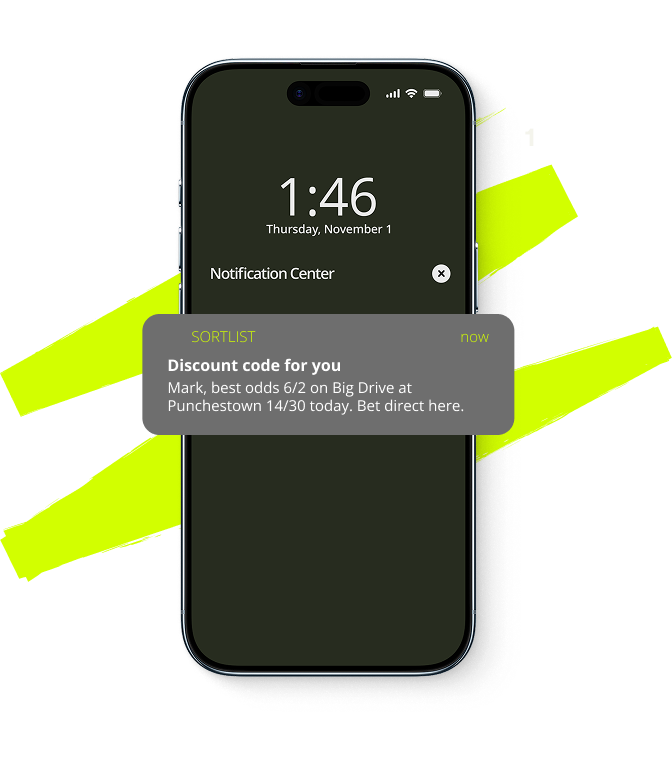
Why is this
important
Low-Friction Re-Engagement
Push notifications allow brands to reconnect with users without requiring inbox or phone access, making them ideal for low-commitment reminders and follow-ups.
Return Traffic Activation
Push notifications are effective for bringing users back to the site when they’ve dropped off, paused, or postponed a decision, or you simply can’t reach them via Email or SMS.
Message Volume Control
By handling reminders and light touchpoints through push, brands reduce pressure on email and SMS, keeping those channels focused on higher-value communication.
Cost-Efficient Reach
Compared to Email and SMS, push notifications provide a cost-efficient way to stay visible and bring users back, especially during repeat visits and the consideration stage.
our Process
Deep Research
This phase focuses on understanding whether push notifications make sense for your brand and how they should be used responsibly. We evaluate your traffic volume, device mix, consent rates, and existing retention channels to define realistic push use cases. The goal is not to increase message volume, but to identify where push can support reminders, re-engagement, and return visits without competing with email or SMS.
Activities
Traffic & Device Analysis
Consent Rate Evaluation
Channel Overlap Assessment
Push Use Case Definition
Opportunity Mapping
Technical Feasibility Check
Outputs
Clear decision on if and where push adds value for your brand.
Defined push use cases focused on reminders and low-friction re-engagement.
Guardrails that prevent push from overlapping or cannibalizing Email and SMS channels.
Push strategy mapping aligned with traffic scale and user behavior.
Push Implementation
In this phase, we implement push notifications as a minimal, supportive layer within your retention strategy. We design simple push flows and campaigns focused on reminders, return visits, and unfinished actions. Every message is built with clear intent, strict frequency rules, and defined limits, ensuring push supports engagement without becoming noisy or intrusive.
Activities
Push Infrastructure Setup
Cross-channel Flow Alignment
Frequency & Pacing Rules
KPI Definition & Monitoring
Outputs
A clean push setup focused on bringing users back, not forcing conversions.
Clear boundaries on when push should and shouldn’t be used.
Consistent reminder touchpoints that support email and SMS flows.
Measurable performance without increasing overall communication volume.
Optimization & Expansion
This phase focuses on continuously refining how push notifications are used as the system scales. We analyze performance, adjust rules and priorities, and ensure push remains a supportive layer rather than a dominant channel. As traffic grows and retention matures, push is fine-tuned to work in harmony with email and SMS, maintaining relevance without increasing overall communication pressure.
Activities
Performance & Impact Analysis
Messaging & Timing A/B
Trigger Effectiveness Evaluation
Long-Term Relevance Checks
KPI Definition & Monitoring
Outputs
Push notifications that scale with traffic without increasing noise.
Clarity on what push should handle vs. what stays in Email or SMS.
Sustained engagement through relevant reminders, not volume.
A stable retention system where push supports growth without disrupting trust.
retention Side
We are covering all Retention Channels in the eCommerce industry.
Whatsapp Marketing
Viber Marketing
Referral Programs
Migration to Klaviyo
Retention Without the Noise
Every Thursday, we share a strategy or insight we’ve discovered while working with top 1% eCommerce brands. Some sell this knowledge through courses, others lock it behind monthly retainers, and some don’t even know it exists. We share it for free, every week.
Learn More about
Push Notification




Frequently Asked Questions
Are push notifications right for every eCommerce brand?
No.
Push notifications work best for brands with sufficient traffic volume and repeat visitors. If a brand doesn’t have enough returning users or on-site engagement, push won’t deliver meaningful impact and should not be prioritized early.
How often should push notifications be sent?
Push notifications should be used sparingly.
They are most effective when reserved for reminders and re-engagement touchpoints, not frequent promotions.
The goal is to support retention without creating noise or desensitizing users to notifications.
When is the right time to introduce push notifications to a visitor?
Push notifications work best once a visitor has demonstrated intent, such as browsing multiple pages, returning to the site, or interacting with products. At that point, push feels like a helpful reminder rather than an interruption.
What you don’t want to do is try to implement push to a first-time visitor, along with all other incentives.
How do push notifications work together with email and SMS?
Push acts as a support channel, not a replacement.
It handles lightweight reminders and return-visit prompts, allowing email and SMS to remain focused on higher-value communication. This balance helps prevent over-messaging across channels.