

The Client
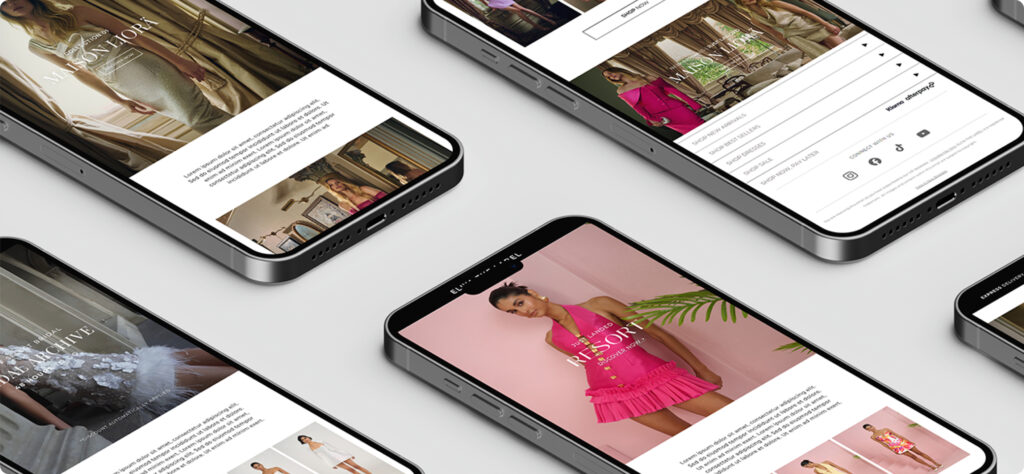
Eliya The Label is an Australian fashion brand known for ornate, detail-heavy dresses and statement pieces. With 7 years in the market and a global customer base spanning the US, UK, Europe, and Asia Pacific, the brand has built a strong following around affordable luxury, from everyday dresses to bridal collections.
Their product catalog is deeply visual. Think intricate fabrics, bold silhouettes, and pieces that look completely different depending on the body wearing them. That last part matters more than most brands realize, and it plays a central role in this case study.
The Challenge Explained
Here is what that looks like from the operations side:
Inventory becomes unreliable. When nearly a third of your orders come back, you can not trust your stock numbers until the return window closes. That is 7 to 30 days of not knowing what you actually have to sell. Restocking decisions, new product launches, and promotional planning all suffer.
Operational costs spike. Every return requires inspection, repackaging, and re-shelving. The customer support team fields questions about return status, refund timelines, and exchange availability. The fulfillment team handles both outbound and inbound logistics. The workload nearly doubles without any additional revenue.
Damaged goods create friction. Not every returned item comes back in sellable condition. In those cases, the customer doesn’t get their money back, so the brand isn’t losing revenue directly. But it still creates a problem. The customer is unhappy, and unhappy customers leave negative reviews, post on social media, and damage brand perception. You win the policy dispute but lose the public perception battle.
Channel metrics become unreliable. When 30%+ of your orders are returned, your revenue reporting, ROAS, and LTV calculations across every marketing channel carry an asterisk. Attribution becomes blurry. Campaign performance looks better than it is. Decisions get made on numbers that don’t hold up.
This was the reality for Eliya The Label when we started working together.
Our Solution
1. PostCo + Klaviyo Integration
The first move was integrating PostCo, a returns management platform that handles everything from initiating returns to offering exchanges and store credit as alternatives to refunds.
PostCo gave the brand a structured way to intercept returns and recover revenue. But here is the thing, tools like PostCo (and most SaaS tools with email notifications) come with limited email capabilities. The default notifications are functional but generic. They don’t reflect the brand, and they miss the chance to actually influence the customer’s decision.
We migrated all PostCo event data into Klaviyo and built custom flows triggered by return-related events. Every touchpoint was redesigned to match Eliya The Label’s visual identity and tone of voice.
The result was a return experience that felt like an extension of the brand rather than a system-generated update, giving us a real window to push customers toward exchanges and credit instead of refunds.
2. UGC-Driven Email Content
One of the biggest drivers of returns in women’s fashion is sizing uncertainty. A dress looks one way on a professional model in a studio and completely different on a real person in natural light. Customers order based on the aspirational image, receive the product, and return it because the fit doesn’t match the expectation.
We tackled this by making user-generated content a core element of the email strategy.
When a woman sees another woman with a similar body type wearing the dress she is considering, the guesswork disappears. She can see the fit, the fabric behavior, and the proportions in a way that product photography simply can not deliver.
3. Survey-Informed Customer Journey Optimization
Rather than guessing what was causing hesitation and returns, we went directly to the customers.
We ran a survey targeting recent purchasers and return initiators, collecting data on the most common objections. Based on the responses, we rebuilt key automated flows to proactively address those issues.
If sizing was the top concern, the pre-purchase flows included detailed size guides, fit notes, and UGC showing real customers in their purchased size. If fabric quality was a common question, those same pre-purchase touchpoints featured close-up imagery and material breakdowns. The goal was to eliminate uncertainty before the order was placed.
Each objection became a trigger for targeted communication rather than something the customer had to figure out on their own.
4. Campaign Design Overhaul
Eliya The Label is not a basics brand. Their pieces are detail-intensive, with intricate lacework, embroidery, and textures that do not translate well through text descriptions alone. You have to see it.
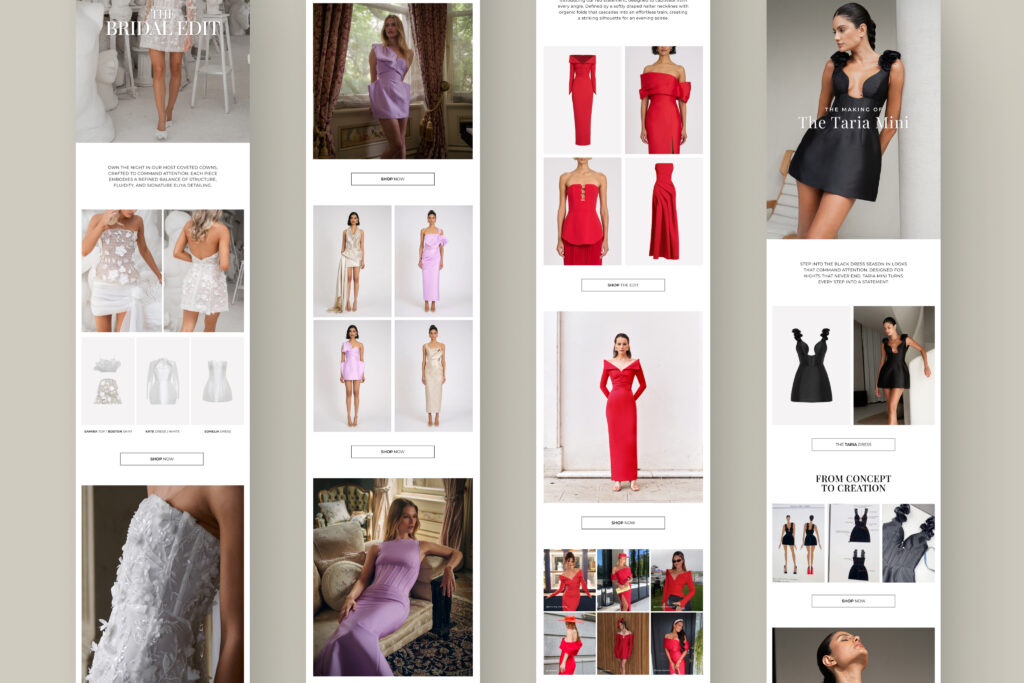
Retention Side reworked the campaign email design to reflect that reality. Layouts became more image-forward, with full-width lifestyle photography, zoom-in detail shots, and minimal copy. The goal was to let the product speak first and let the words support, not lead.
In a niche where the visual experience drives the purchase decision, email design is not just aesthetics. It is a conversion strategy. When a customer fully understands what they are buying before they click, the gap between expectation and reality shrinks, and so do returns.
The Results
Reducing the order return rate by 8 % across a business doing $10M-$20M in annual revenue is not just a marginal improvement. It means less inventory sitting in limbo, a lighter load on customer support and fulfillment, cleaner financial reporting across all channels, and more net revenue from the same volume of orders.
The Takeaway
Returns are not just a logistics problem. They are a communication problem.
Most brands treat the return process as a necessary operational function, something to manage and minimize friction around. But what we have seen working with Eliya The Label (and across our portfolio of eCommerce clients) is that the email touchpoints surrounding a purchase are some of the highest-leverage moments in the entire customer lifecycle.
When you use those moments to inform, reassure, and guide the customer, the return rate drops. Not because you made returning harder, but because you made buying right easier.