
What Is Customer Retention (And Why Does It Matter for eCommerce Brands)?
Customer retention is the ability of your brand to keep existing customers coming back and buying again. Simple concept. Massive impact.
Here’s why it matters so much in eCommerce specifically. Acquiring a new customer costs five to seven times more than keeping one you already have. That alone should shift how you think about your marketing budget. But there’s more.
After a first purchase, a customer has roughly a 27% chance of coming back. Not great. But once they place that second order, the probability of a third jumps to 54%. Everything you do to earn that second purchase compounds from there.
Repeat customers spend up to 67% more than first-time buyers. They already trust your brand. They need less convincing. And they’re significantly more likely to refer someone new, which means your retention efforts quietly fuel acquisition too.
Despite all of this, most eCommerce brands still pour the majority of their budget into getting new customers through the door. Only about 44% of businesses prioritize retention at all. The ones that do? They grow revenue roughly 2.5x faster than their competitors.
Retention is not a nice-to-have. For eCommerce brands, it’s the difference between a business that scales and one that keeps bleeding money trying to replace lost customers.
Email Is Retention. Retention Is Not Email.
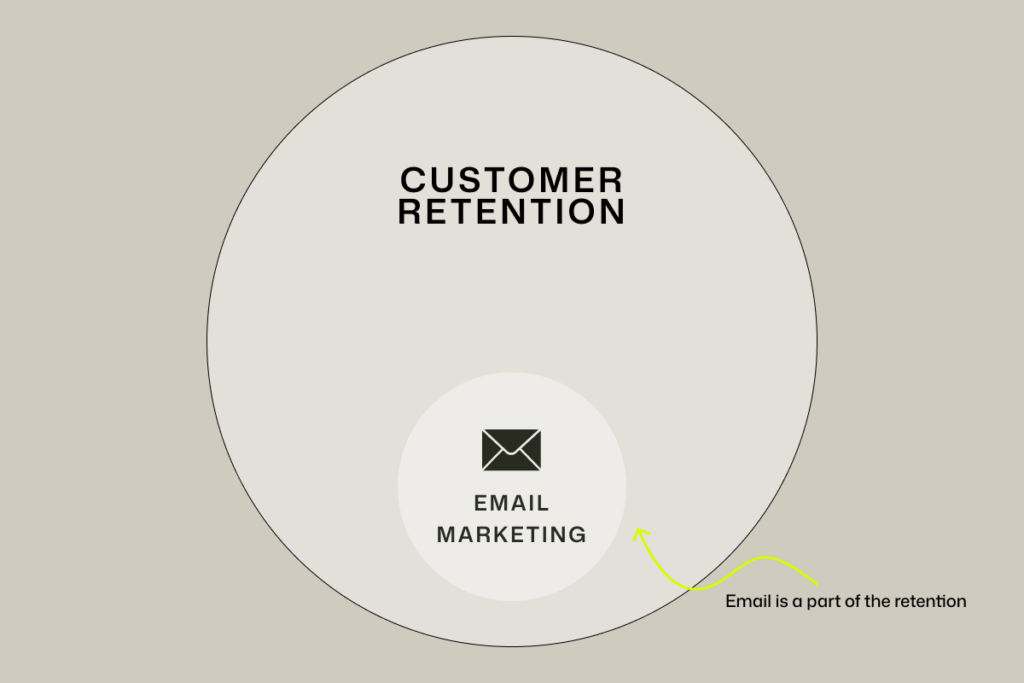
When most eCommerce brand owners hear “retention marketing,” they immediately think email. And they’re not wrong. Email is the backbone of retention. It’s the first channel most brands set up, and for good reason.
But here’s where the thinking gets limited.
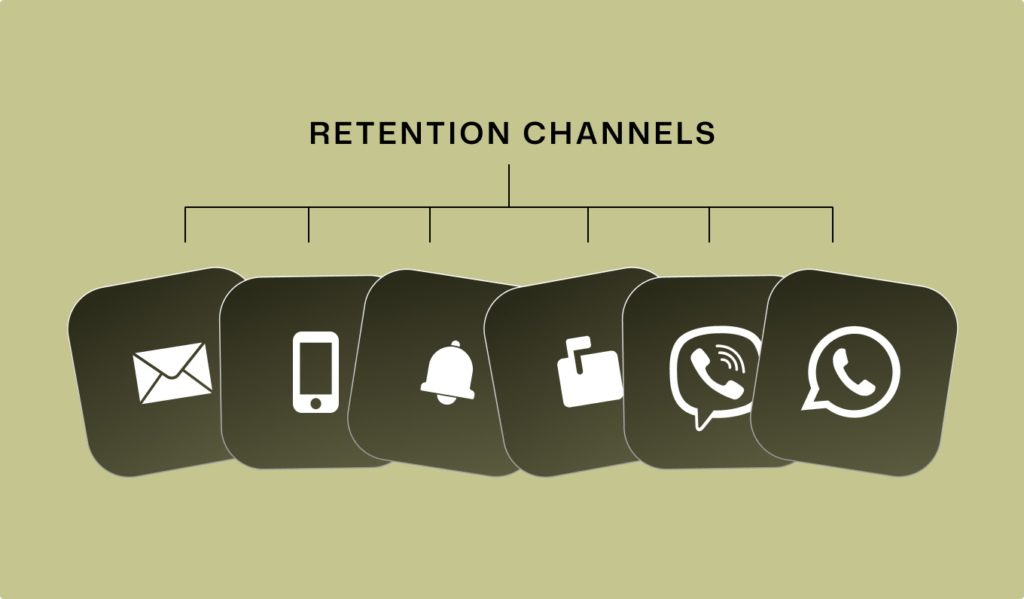
Retention is not a channel. It’s an ecosystem. Email is one tool inside that ecosystem. If your entire retention effort lives and dies inside your email platform, you’re leaving serious revenue on the table.
Think about it this way. Not every customer opens emails. Not every customer even checks their inbox regularly. Some respond better to a text message. Others need a push notification to remind them about that abandoned cart. And some customers, the really valuable ones, might re-engage because a physical postcard showed up in their mailbox.
After managing retention programs across dozens of eCommerce brands, we’ve seen a clear pattern. Brands that rely on a single channel hit a ceiling. A strong retention strategy uses multiple channels working together, each one reaching customers where they’re most responsive. Email is the starting point. But it’s not the finish line.
Let’s break down the channels that actually make up a complete retention marketing mix.
Email Marketing
Email is the foundation. No debate there.
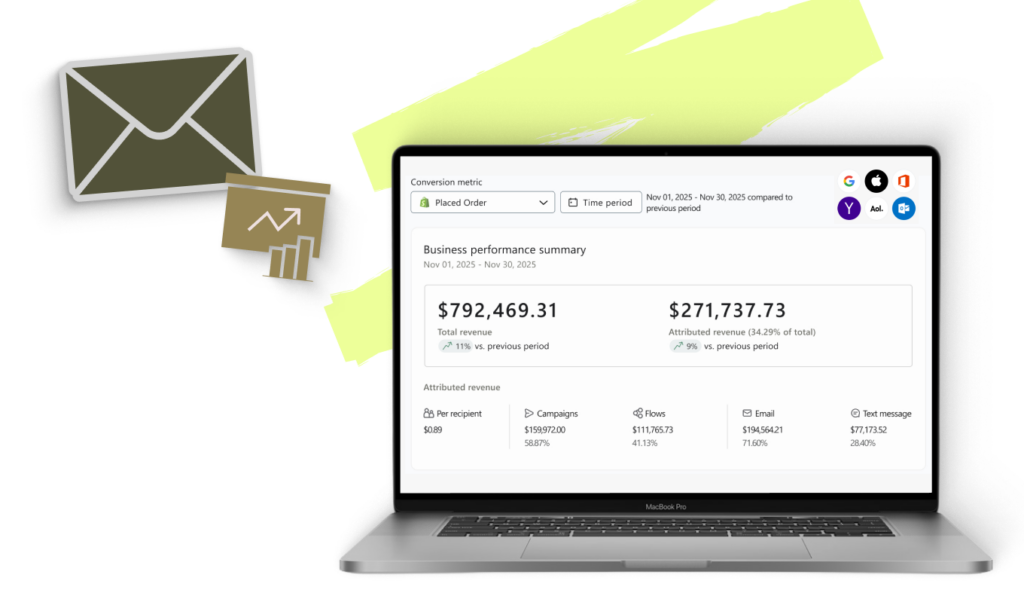
It remains the highest-ROI marketing channel available to eCommerce brands. For every $1 spent, email generates an average return of $36 to $45, depending on the industry and how well your flows are built. For eCommerce and retail specifically, that number often climbs even higher.
Email also gives you the most real estate to work with. You can tell a story, showcase products, educate your customers, and drive action, all within a single message. Compare that to other retention channels or any other marketing channel, where you’re working with a sentence or two.
And then there’s the cost. Email is cheap to send. The incremental cost of reaching one more person is almost nothing. That’s why it scales so well and why the ROI stays strong even as your list grows.
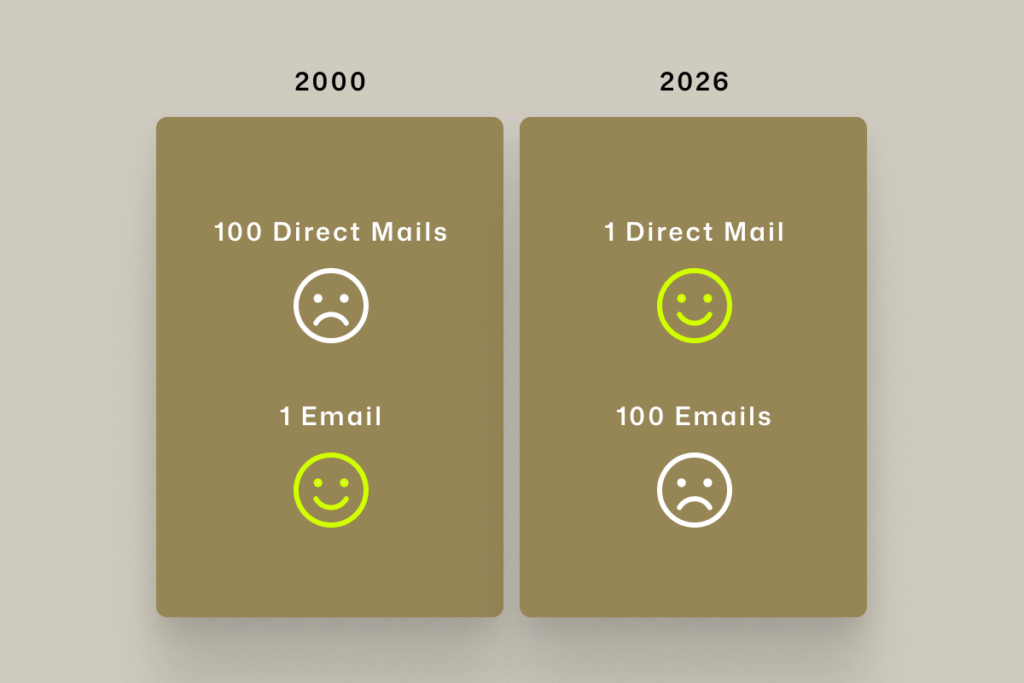
But email has limitations. Inbox competition is brutal. The average consumer receives over 100 emails per day. Getting noticed, let alone clicked, is harder than ever. Deliverability challenges continue to grow. Gmail’s AI-powered filtering is getting smarter, and brands that don’t actively manage their sender reputation see diminishing returns fast.
Email is where your retention strategy starts. It’s the channel with the widest reach, the lowest cost, and the most versatility. But on its own, it can’t do everything.
SMS Marketing
SMS open rates range from 90% to 98%. And the vast majority of text messages get read within three to five minutes of delivery. No other marketing channel comes close to that kind of immediacy.
For eCommerce retention, SMS marketing excels in moments that demand urgency. Abandoned cart reminders, flash sales, back-in-stock alerts, shipping updates. These are messages where timing is everything, and SMS delivers them faster and more reliably than email.
The ROI reflects this. Industry data shows eCommerce brands generate anywhere from $21 to $71 for every $1 spent on SMS marketing, depending on how well the channel is optimized.
But SMS is not a replacement for email. It’s a different tool for a different job.
The biggest difference? Consent is harder to collect. Getting their phone number and explicit SMS opt-in takes more trust and a stronger incentive. Most brands see their SMS list at around 20-30% the size of their email list. There’s also frequency sensitivity. 73% of customers will unsubscribe if they feel they’re getting too many texts.
SMS works best when it complements email, not when it duplicates it. Use email for the longer story and the broader campaign. Use SMS for the time-sensitive, high-intent moments where speed matters.
Push Notifications
Push notifications live in a unique space. They reach customers directly on their phone’s lock screen or browser, without needing an email address or phone number. All you need is an app install or browser permission.
For eCommerce brands with a mobile app, push notifications are a low-cost, high-frequency touchpoint. They work well for price drop alerts, restocks, order status updates, and reminders about items left in a cart.
The challenge with push is that it’s easy to overdo it. Notification fatigue is real, and once a customer turns off your notifications, you’ve lost that channel entirely.
Where push really earns its place in a retention stack is as a supporting channel. It’s the gentle nudge that reinforces what your email and SMS are already doing.
Direct Mail
Remember when getting an email felt exciting? That’s how physical mail feels now. As digital inboxes got noisier, the physical mailbox got quieter, and that’s exactly why it works. Around 73% of consumers say they enjoy checking their mailboxes, and 71% say it feels more personal than anything digital.
That’s what makes direct mail so effective for retention. It doesn’t compete with 100 other messages. A well-designed postcard sits on a kitchen counter for an average of 17 days. The average email lives for about 17 seconds.
For eCommerce, direct mail fits best in high-value retention moments. Win-back campaigns for lapsed VIPs. Personalized offers for customers who haven’t purchased in 90 days. Thank-you cards after a first order. These touchpoints make customers feel valued, not just targeted.
The trade-off is cost. Direct mail runs $0.30 to $3 per piece, making it the most expensive channel in the retention mix on a per-unit basis. That’s why it works best for targeted segments, not mass sends. But when integrated with your digital channels, the combined impact is significantly stronger than any single channel alone.
Loyalty Programs
Loyalty programs are different from every other channel on this list. They’re not a communication method. They’re a retention structure.
Email, SMS, push, direct mail, these are all ways to reach a customer. A loyalty program is a reason to stay. 84% of consumers say they’re more likely to stick with a brand that offers one, and members generate 12% to 18% more revenue annually than non-members.
But too many eCommerce brands treat loyalty like a checkbox. They install an app, set up a basic points-per-dollar structure, and call it done. That’s not a loyalty program. That’s a widget. The programs that actually move retention metrics are built around customer behavior, not just transactions.
There’s also a psychological angle. Once a customer has accumulated points or reached a VIP tier, leaving means walking away from value they’ve already built. That’s a retention lever no email sequence can replicate.
The key is integration. Your loyalty program should feed into every other channel. Email reminders about points balances. SMS alerts when they’re close to a reward. Push notifications for double-points events. When the program connects to your communication channels, the entire system gets stronger.
WhatsApp & Viber
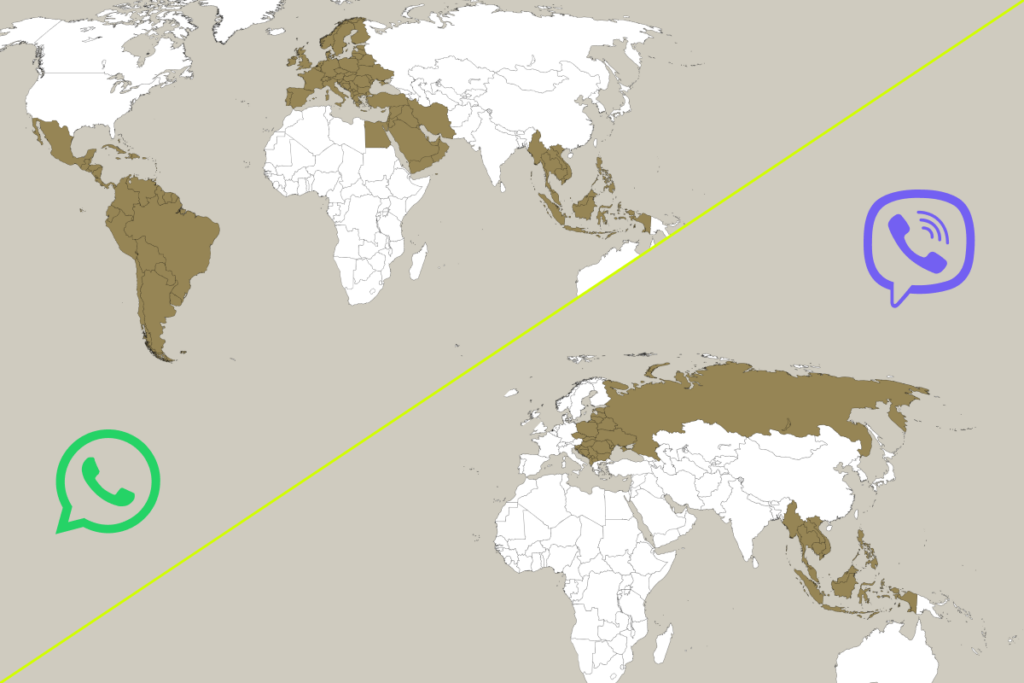
In certain markets, these aren’t alternative channels. They’re the default. WhatsApp has over 2 billion active users globally and dominates in Latin America, Europe, the Middle East, and Southeast Asia. Viber holds a similar position across Eastern Europe and the Balkans.
For brands selling into these regions, ignoring these platforms means missing where your customers actually communicate. They function similarly to SMS but with richer message formats, including images, product carousels, and interactive buttons.
The challenge is infrastructure. Different integrations, different compliance standards, different content strategies. If your customer base is primarily US-based, these channels are worth watching but may not be a priority yet. If you’re selling into regions where these apps dominate daily communication, they belong in your retention mix.
Why Running Five Channels Independently Still Isn't Retention
We’ve audited retention setups where brands had every channel active, email, SMS, push, loyalty, all running. Revenue was still flat. The problem wasn’t the channels. It was that none of them knew what the others were doing.
Running channels in parallel is not an omnichannel retention strategy.
The difference is coordination. A customer who just converted from an SMS shouldn’t get the same offer via email two hours later. A VIP who redeemed a loyalty reward yesterday shouldn’t receive a generic win-back push today.
Every channel in your retention mix should have a clear role. When each one has a defined purpose and they’re coordinated around the customer journey, they amplify each other. When they all fire independently with no awareness of what the other channels are doing, they create fatigue and make customers feel spammed.
How to Build Your Retention Channel Mix
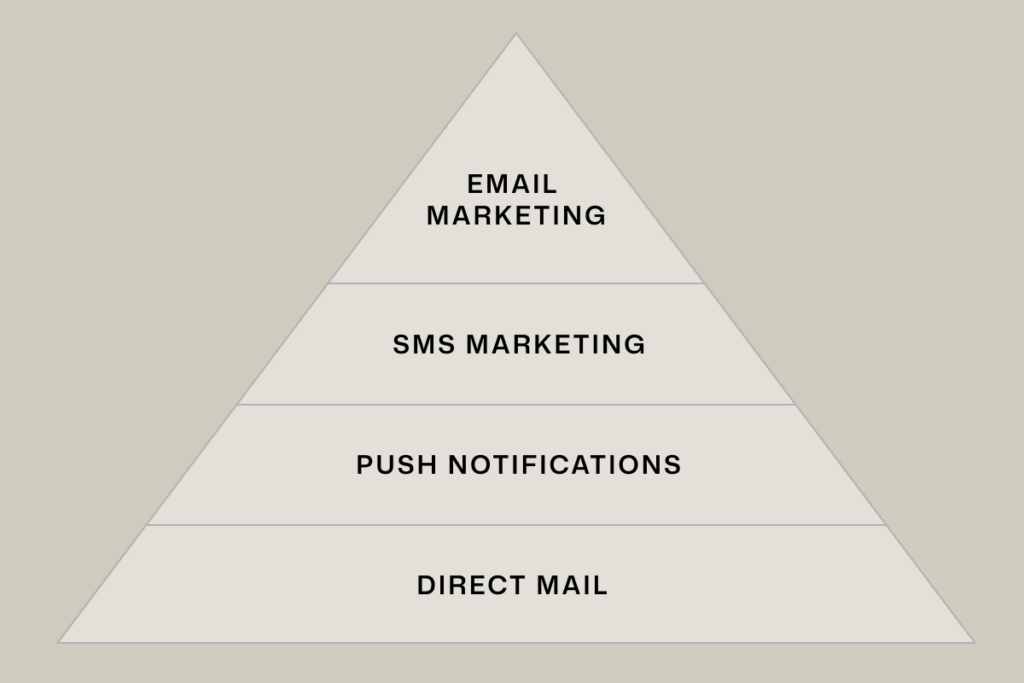
Not every brand needs every channel from day one. Start where consent is easiest and cost is lowest, then expand.
In most cases, email will be your starting point. Easiest consent, lowest cost, most mature infrastructure. If your email program isn’t performing, fix that before adding anything else.
Add SMS second. Harder consent, higher cost per message, but engagement rates justify it. Start with automated flows before expanding into campaigns.
Layer in push notifications. No personal contact info required, just a permission tap. Use it to support email and
SMS, not replace them.
Introduce a loyalty program, but only when the math works. Quality loyalty programs are not cheap. They only make sense when you have enough customers in each segment to generate positive ROI from targeted communication. If you have a handful of customers per spend tier, your budget is better spent on acquisition and converting first-time buyers into repeat buyers.
Use direct mail for high-value segments. A precision tool for VIP customers, lapsed high-spenders, and moments where a physical touchpoint creates an outsized impact.