
Groceries & snacks
email marketing
Turn a first taste into a repeat order with relevant product discovery, practical replenishment, and subscriptions that match household consumption.










your biggest
challenges
TRIAL NEVER BECOMES A HABIT
A first taste does not guarantee a place in the weekly shop. A mixed box may include only a few favorites. If the customer does not find an everyday use, the trial remains a one-off purchase.
HOUSEHOLDS CONSUME AT DIFFERENT SPEEDS
Households finish the same pack at different speeds. Portion habits, household size, and other shopping affect consumption. A standard delivery schedule can create excess stock or leave a gap in supply.
TASTE AND DIETARY PREFERENCES DIFFER
Preference and ingredient mismatches limit repeat demand. A popular flavor may not suit the customer’s taste or stated dietary preferences. Irrelevant offers reduce the appeal of the next basket.
DELIVERY AND VALUE AFFECT THE REORDER
The economics of the next basket can break the habit. Shipping charges, minimum orders, freshness expectations, and stock gaps can outweigh the appeal of reordering. Repeat purchase frequency can fall even when the product is liked.
We Solved
This Before
Our published Groceries & Snacks portfolio averages include +13% direct online sales, +25% customer lifetime value, and +34% repeat purchase rate. These are the category averages published in our industry overview.
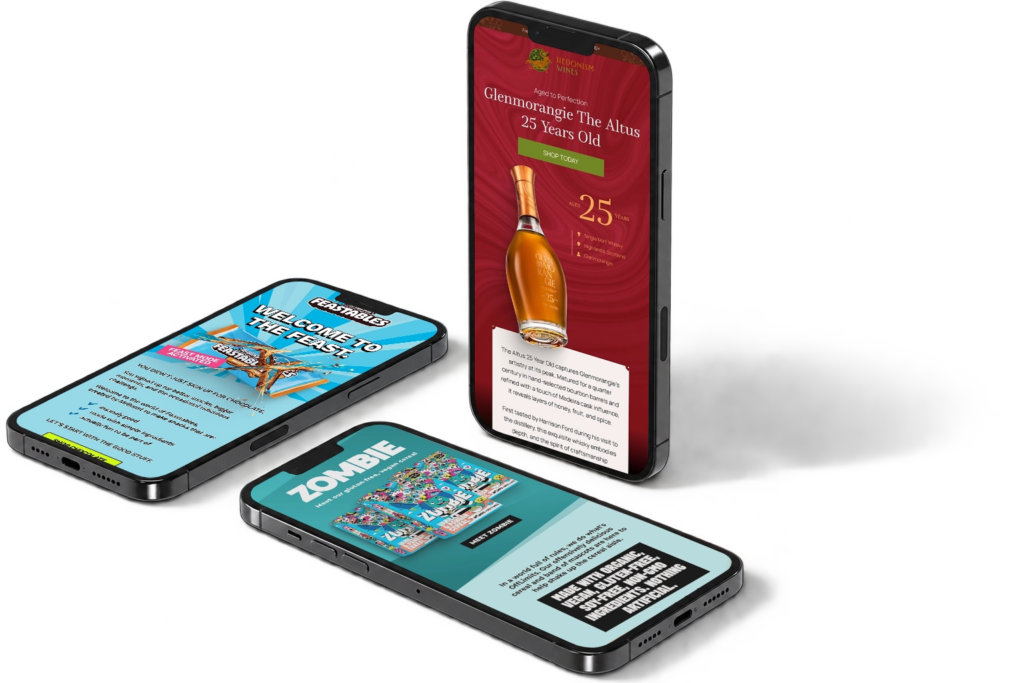
Our work gives customers useful reasons to order directly again through relevant bundles, subscriptions, flavor discovery, and product education. Those touchpoints form a connected path from first taste to a convenient repeat basket. The portfolio figures describe that wider category work; an individual email design illustrates one part of the communication rather than proving a standalone campaign result.
our Process
Research & Discovery
Learn what turns trial into a regular order.
We compare trial boxes, repeat baskets, product preferences, and order intervals. Subscription changes and delivery feedback are reviewed alongside pack and basket economics so product demand is not confused with a shipping or quantity issue.
The audit establishes a first-to-second basket baseline and identifies the data available for favorites and refill journeys. Each priority has a measurable outcome, a data source, and an owner for resolving product or ordering friction. See our email marketing service for the delivery scope.
Activities
Product & Pack-Size Review
Flavor Preference Data Audit
Trial-to-Reorder Analysis
Household Purchase Cadence
Subscription & Basket Review
Delivery Feedback Analysis
Deliverability & Data Audit
Outputs
A view of which trial products lead to repeat baskets.
Useful flavor and product preferences for segmentation.
Identified gaps in reorder timing, delivery clarity, and basket value.
A roadmap for turning first taste into a useful household habit.
Customer Journey Workshops
Map the first taste through the household shop.
We map a mixed trial box, a favorite-product reorder, an unavailable item, and a subscription quantity change. Each scenario gets a clear next step based on the customer’s basket and preferences.
The team agrees when to ask for feedback, how bundle recommendations are chosen, and which order changes end a reminder path. The deliverable defines message purposes and handoffs so discovery and replenishment work as one coherent journey.
Activities
First-Taste Journey Mapping
Preference & Feedback Capture
Everyday Habit Friction
Delivery & Basket Value Review
Refill & Subscription Paths
Relevant Discovery Planning
Outputs
Mapped follow-up from first taste to product feedback and reorder.
A plan for relevant flavor discovery without unsuitable assumptions.
Clear routes to adjust subscriptions and delivery timing.
Defined opportunities for convenient, preference-led baskets.
Implementation & Execution
Make the next basket easy to build.
First-order emails ask about favorites and offer relevant serving or lunchbox ideas. Follow-up can link straight to enjoyed flavors or a sensible bundle, using stated preferences and verified ingredient details. Reorder timing follows observed purchase intervals, while subscribers get clear options to change quantity or cadence. Fresh orders stop reminders for stock the household has already replenished.
We check available flavors, bundle contents, ingredient information, and delivery links before launch. Automated journeys and campaigns use the same preferences, keeping serving suggestions and refill offers consistent with what the customer has enjoyed and chosen.
Activities
Flavor Preference Capture
First-Order Follow-Up
Consumption-Based Reminders
Relevant Bundle Journeys
Subscription Cadence Messaging
Product Cohort Tracking
Outputs
Product-specific first-order and replenishment journeys.
Preference-led recommendations using verified ingredient information.
Subscription messages that explain quantity and cadence options.
A baseline for trial-to-repeat rate, basket margin, and feedback.
Continuous Optimization
Test whether discovery becomes a repeat habit.
We compare flavor-led recommendations, serving ideas, and refill timing against trial-to-second-order conversion. Basket margin, subscription changes, and feedback show whether convenience and value are improving together.
We also separate discovery orders from established repeat baskets when reviewing performance. This helps show whether a message introduces a new favorite, makes a regular order easier, or simply shifts demand into another discounted purchase.
Activities
Reorder Window Tests
Flavor Recommendation Review
Bundle & Basket Experiments
Subscription Flexibility Review
Trial-to-Repeat Cohort Analysis
Margin & Revenue Tracking
Outputs
Evidence on reorder timing and relevant product combinations.
A clearer view of trial products that earn repeat purchases.
Decisions on bundles, subscription cadence, and product segments.
A test plan tied to repeat baskets and contribution margin.
GROCERIES & SNACKS
CUSTOMER LIFECYCLE MAP
A trial order moves into preference learning before refill. A customer who identifies favorites can build the next basket around them; an unwanted flavor should leave that recommendation path. A new order resets the household interval, while a subscription quantity change resets the next delivery expectation.
Explore subscription retention when quantity or delivery cadence stops matching the household.
BEEN THERE DONE THAT
Why should
you care?
The second basket matters only if customers want it and the margin holds.
What commercial progress looks like
F1-to-F2 conversion
The next basket after the initial trial order.
Purchase frequency
Basket frequency and household reorder intervals.
Customer lifetime value
Customer value across repeat baskets and subscriptions.
Contribution margin
Basket value after product costs, delivery, and promotions.
A trial box creates an opportunity, not a recurring customer. The commercial value appears when products become part of the household shop and the customer chooses a second basket without needing the original acquisition offer again.
F1-to-F2 conversion after the trial order is an early sign of that transition. Purchase frequency and customer lifetime value show whether it lasts across later baskets. Favorite-product reorders and subscription adjustments help explain whether a household is buying at a comfortable pace or receiving more than it needs.
Repeat baskets have to earn their delivery and product costs. Minimum orders, incentives, and shipping affect contribution margin, especially for small refills. Relevant second-purchase journeys can make a favorite easy to buy again while keeping the value of each basket visible.
What commercial progress looks like
F1-to-F2 conversion
The next basket after the initial trial order.
Purchase frequency
Basket frequency and household reorder intervals.
Customer lifetime value
Customer value across repeat baskets and subscriptions.
Contribution margin
Basket value after product costs, delivery, and promotions.
ECOMMERCE
CLIENT RESULTS
We measure repeat purchase rate, conversion from the first order to the second, customer lifetime value, purchase frequency, and contribution margin. Our client reporting connects those business outcomes with campaign and lifecycle-flow performance, rather than judging success by opens or clicks alone.
Who this is/ISN’t for
Grocery and snack brands are a strong fit when product enjoyment, household convenience, and repeat basket value can develop together.
STRONG FIT
1. BRANDS WITH A PROVEN ACQUISITION ENGINE
You already have customers enjoying the products and a dependable way to attract trial buyers. Flavor preferences and order history help us understand which purchases become household favorites.
2. WILLING TO IMPROVE THE FULL FUNNEL
You can improve delivery expectations, ingredient information, bundle choices, and subscription controls alongside email. Customers need a convenient route to the next basket when a reminder arrives.
3. TEAMS THAT KEEP CHALLENGING THEMSELVES
Your team is willing to learn from flavor feedback and test serving ideas, refill timing, and relevant bundles. We review repeat orders and margin together when deciding what to scale.
NOT A FIT
1. RETENTION BEFORE ACQUISITION
If the products do not yet generate consistent demand or positive customer feedback, establish that foundation first. A reminder cannot make an unwanted flavor into a household staple.
2. SET-AND-FORGET MENTALITY
Stock, product ranges, and household preferences change. Email journeys need current ingredient details, available recommendations, and ongoing review of purchase and subscription behavior.
3. COMFORT OVER PROGRESS
If all customers must receive the same bundle or delivery cadence despite feedback, relevance will suffer. We need room to improve quantity, timing, and the value of the next basket.
Before working with Retention Side, most of our growth came from paid ads. When ads were performing, things looked good. When they weren’t, cash flow got tight pretty quickly. Over the past months, our repeat customer rate moved close to 40%, and that changed how the business feels. Revenue is still seasonal, but it’s far less stressful.

Founder · Beauty & Skincare
Nevena Komazec
Frequently Asked Questions
How do you turn a sample or trial box into a second grocery order?
Make the second basket easier to choose than the first. After a mixed trial box, ask which flavors the customer enjoyed and link to those products or an appropriate bundle. Serving ideas can answer a specific use question. The second order should reflect that feedback rather than automatically repeating the full trial assortment.
How do you choose reminder timing for snacks and pantry products?
Start with pack size and actual reorder intervals, then test against household purchasing patterns and the chosen delivery cadence. A new order should stop an outdated reminder; buyers should be able to change subscription timing.
How do you personalize food recommendations responsibly?
Use preferences customers provide and verified product ingredient information. Keep recommendations relevant to those preferences without inferring allergies, dietary needs, or health outcomes from a single purchase.
How do you grow repeat baskets without constant coupons?
Make the next order more convenient through relevant bundles, remembered preferences, serving ideas, and useful reorder timing. Test whether subscriptions or loyalty add real value, and review margin alongside repeat revenue.
What should you measure for grocery and snack retention?
Track trial-to-second-order conversion, reorder intervals by product, repeat basket value, subscription changes, feedback, and contribution margin. Distinguish one-time discovery purchases from products customers regularly consume.
Build your next stage of
customer growth.
Build your next stage of
customer growth.
Bring your customer journey, account data, and commercial goals. We’ll identify the retention opportunities that fit your products and buying cycle.