


Most ecommerce push notification case studies open with a number like 182% or 103X and stop there. That number is real in the sense that someone reported it. It just doesn’t tell you whether the same channel will do anything useful in your store, next to your email and SMS programs, with your traffic.
This article reads three published web push cases the way an operator should: what was measured, against what, over what period, and who published it. We also cover what a push channel needs in order to earn its place in a retention system. It is the push counterpart to our critique of SMS marketing case studies.
Key takeaways
- Every case below was published by a platform vendor or by the vendor’s partner, so treat the results as self-reported.
- Several headline figures have no stated comparator or time window, which makes them hard to reuse as benchmarks.
- Abandoned-cart recovery is the most consistent use case across the three, and it fits a reminder-style role for push.
- Push works best as a third layer after email and SMS, and only for brands with enough returning visitors.
How we read these case studies
We kept only cases where we could read the original page in full. Each one gets the same four questions:
- Who published it, and who benefits from the result?
- What was the comparator: before and after, one platform against another, or one channel against another?
- Over what period, and is that period disclosed at all?
- Is the figure revenue attributed to push, or revenue push actually caused?
The last question matters most. Attributed revenue is not incremental revenue, and almost no vendor case study separates the two. Treat everything below as evidence that a tactic can work, not as a forecast.
Case 1: Inspire Uplift and the platform switch
OneSignal reports that MuteSix, the agency managing the ecommerce platform Inspire Uplift, saw a 182% increase in sales revenue, a 207% increase in conversion rate, a 68% increase in average session duration and a 75% increase in average monthly CTR. All of that came within the first month after moving from PushOwl to OneSignal. The same page reports an immediate 6% increase in sales conversions, says 10% of Inspire Uplift’s web push revenue comes from abandoned-cart automation, and cites a combined ROI increase of 1091% with no timeframe given.
This is a vendor case study, and the vendor is the one that won the account. That doesn’t make it false. It does shape how to read it.
- The comparator is another push tool. This is a switch from one platform to another, and a platform switch is rarely just a platform switch. Migrations usually come with a rebuilt setup, new automations and fresh attention from the agency. The page doesn’t tell us how much of the lift came from the software.
- Two conversion figures sit side by side. A 207% conversion rate increase and a 6% increase in sales conversions appear on the same page. They likely measure different things, but the material we reviewed doesn’t reconcile them.
- The most useful line is the least dramatic. Abandoned-cart automation accounting for 10% of web push revenue says a lot more about where push earns its keep than the 1091% ROI figure, which has no period attached.
What to take from it: a disciplined automation, in this case cart recovery, can carry a meaningful share of push revenue. What not to take from it: an expectation that changing vendors will triple your conversion rate.
Case 2: Jumia and the abandoned-cart reminder
The Jumia case on web.dev, Google’s case-study program, is the oldest of the three and the most specific about its starting problem. Nearly a quarter of shopping carts on Jumia’s mobile site were abandoned daily, and over 65% of web traffic came from mobile browsers. Web push, implemented through Accengage middleware via Google Tag Manager, produced a 38% open rate on mobile and recovered carts 9X more often than the earlier approach, which was email reminders. Previously abandoned carts from web push users converted at 7.85%, against 4.5% for the native app. Jumia’s CEO described web push as a more personal channel for customers reluctant to download apps.
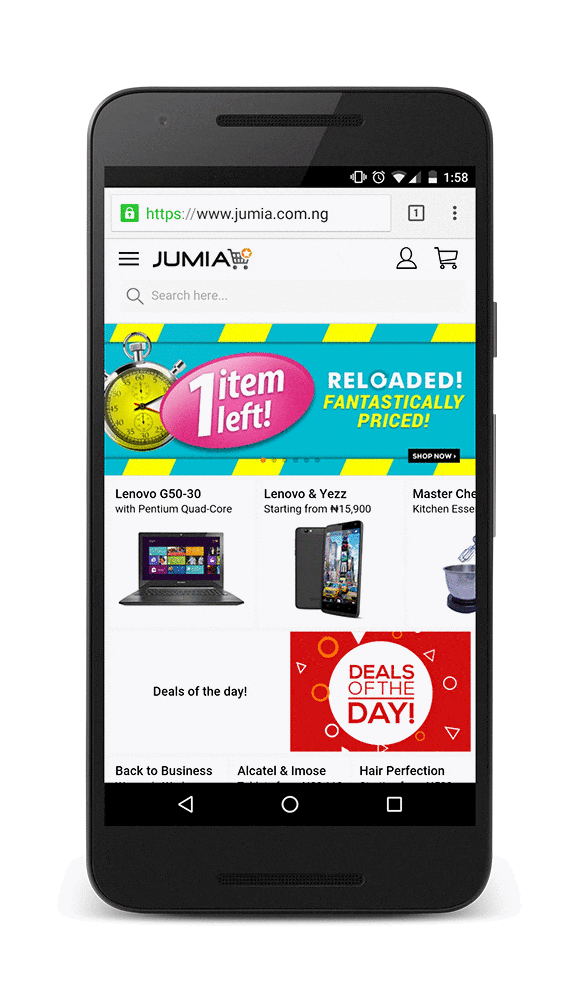
Image: the abandoned-cart web push reminder flow documented in Google’s web.dev Jumia case study, the same mobile-first mechanism analyzed above.
The page was last updated on 2016-05-15 UTC, and no measurement window is disclosed. That makes the absolute rates historical context, not a benchmark. Push permission prompts, browser behavior and inbox habits have all changed since. A 38% mobile open rate in 2016 tells you nothing about what to expect from your own audience now.
The structure of the result still holds up as a pattern:
- The use case was narrow. Push was pointed at one clear behavior, cart abandonment, on a mobile-heavy audience that didn’t want to install an app.
- The comparison was against email reminders. That is a more useful comparator than “before push”, though it doesn’t say whether push replaced email or ran alongside it.
- Channel sequencing was never described. We don’t know whether a push and an email could land on the same shopper in the same hour. That question decides whether you gain recovery or just create fatigue.
Case 3: Wow Skin Science and the segmented cadence
PushOwl reports that the skincare brand Wow Skin Science earns a 103X ROI on its PushOwl spend. The account has 25K web push subscribers and attributes 3.2% of all orders to web push. The page also reports a 3.7% CTR on segmented campaigns, a 4.6% CTR on abandoned-cart notifications, an AOV of 56.13 USD on web push orders and a 60 USD AOV on browse-abandonment notifications. The brand sends 2-3 web push notifications per week, mixes promotional and educational content, and segments by buying-process stage. No measurement period is disclosed.
This is the richest of the three for operators, because it describes a program rather than a single trick. It also has the most ambiguity:
- ROI is measured against tool spend. A 103X ratio against a software fee says little about the full cost of the channel, including discounts, creative and management time.
- A 3.2% order share is the honest number. It is attributed, not incremental, and it describes a channel that adds a modest slice of orders, not a replacement for anything.
- Two figures lack comparators. The page reports a 22% AOV increase and a 103% CTR increase for segmented campaigns, and neither says what they are measured against.
- The first-time customer stat can be read two ways. The page says 19% of all orders placed via web push come from first-time customers. That could mean push is working as an acquisition-side channel or simply that push subscribers are partly new visitors. The page doesn’t say which.
The 2-3 per week cadence is also worth testing against your own list rather than copying. We’d treat it as a starting hypothesis, not a norm. The detail that carries over is the segmentation by buying stage, because it is the difference between a reminder and a broadcast.
What the three cases have in common
| Case | Published by | What it reports | What’s missing |
|---|---|---|---|
| Inspire Uplift | OneSignal, results reported by MuteSix | First-month lifts after a platform switch; 10% of web push revenue from abandoned-cart automation | Reconciliation of conversion figures; period for the ROI claim; what else changed |
| Jumia | Google web.dev with Jumia | Cart recovery vs earlier email reminders; open and conversion rates | Measurement window; current relevance (page last updated 2016-05-15) |
| Wow Skin Science | PushOwl | ROI on tool spend; share of orders; CTR and AOV by use case | Measurement period; comparators for two lift figures; incrementality |
The pattern is consistent even though the numbers aren’t. In each case push is doing reminder and re-engagement work: cart recovery, browse abandonment, segmented nudges. None of them describes push as the engine of the program. Nothing in the retained evidence shows push winning as a broadcast promotional channel.
Where push fits in a retention system
Push is a permission-tap channel, and in our view it belongs third in the sequence. Email comes first, SMS is added second, and push is layered in to support both, as we lay out in our guide to which channels make a good retention strategy. It reduces pressure on email and SMS. It doesn’t replace them.
Two conditions decide whether it’s worth building:
- Enough traffic and repeat visitors. Push needs returning users and on-site engagement. A brand without them gets little out of it early, and the effort is better spent elsewhere in the system.
- A defined role. Channels firing independently create fatigue. A VIP who redeemed a loyalty reward yesterday shouldn’t receive a generic win-back push today. Push needs rules about when it speaks and when email or SMS already has.
That’s why we use push sparingly, for reminders and re-engagement touchpoints rather than frequent promotions. It’s also why our push work starts with research before any setup: traffic and device analysis, consent rate evaluation, a channel overlap assessment, use-case definition, opportunity mapping and a technical feasibility check. The aim is to find where push can support return visits without competing with email or SMS, not to add message volume.
Questions to ask before you copy a push case study
- What is the comparator, and is it disclosed?
- Does the result describe a single automation or a whole program?
- Is the number attributed to push or shown to be incremental?
- What is your consent rate, and how many subscribers do you realistically expect on push?
- Which email and SMS flows already cover the same moment, such as cart abandonment?
- Who owns the coordination between channels once push is live?
If you can’t answer the last two, the case study isn’t your constraint. Channel coordination is.
The decision push actually asks of you
The three cases support a modest conclusion: push can recover carts and re-engage returning visitors when it has a narrow job and a clear place in the channel order. They don’t support a promise of triple-digit lifts, and they don’t tell you whether your audience has enough returning traffic to make it worthwhile.
If you’re weighing push for your own program, start with the audit questions above and map them to your current email and SMS flows. That is the first step in how Retention Side evaluates push, and it usually tells you whether the channel should be built now, later or not at all.